
Germs "sometimes" cause Disease ...
Post #1501

… but they do not cause disease often enough to justify spending any taxpayer money on “pandemic preparedness.”
The Germ Theory of Disease got created in the late 1800s:
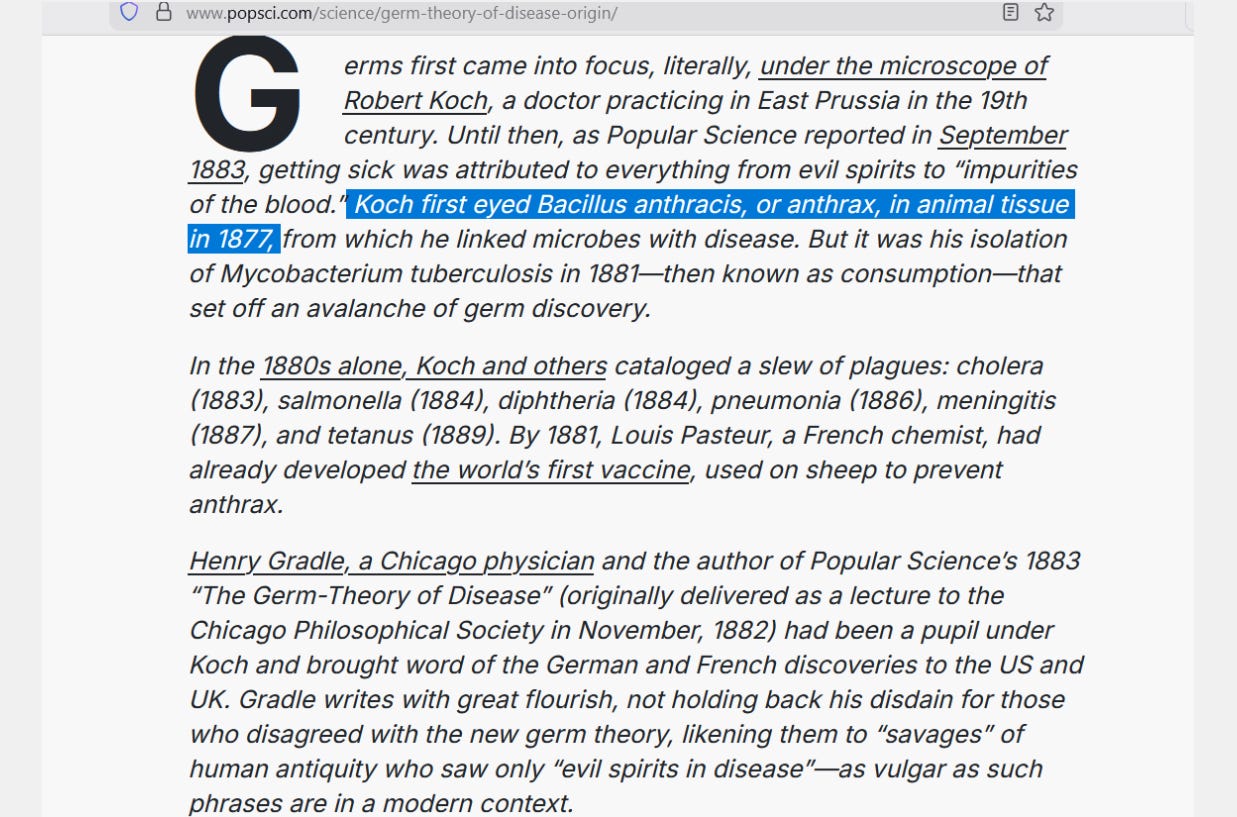
But though adopted by the orthodox medicine of the time, it was criticized for being microbe-centric (100% focused on germs being “the cause” of infectious disease). It fails to account for the possibility — and more to the point, the common occurrence — of asymptomatic carriers of supposed “disease-causing” microorganisms.
The theory of disease which has more explanatory power than Germ Theory, is the Epidemiologic Triad:
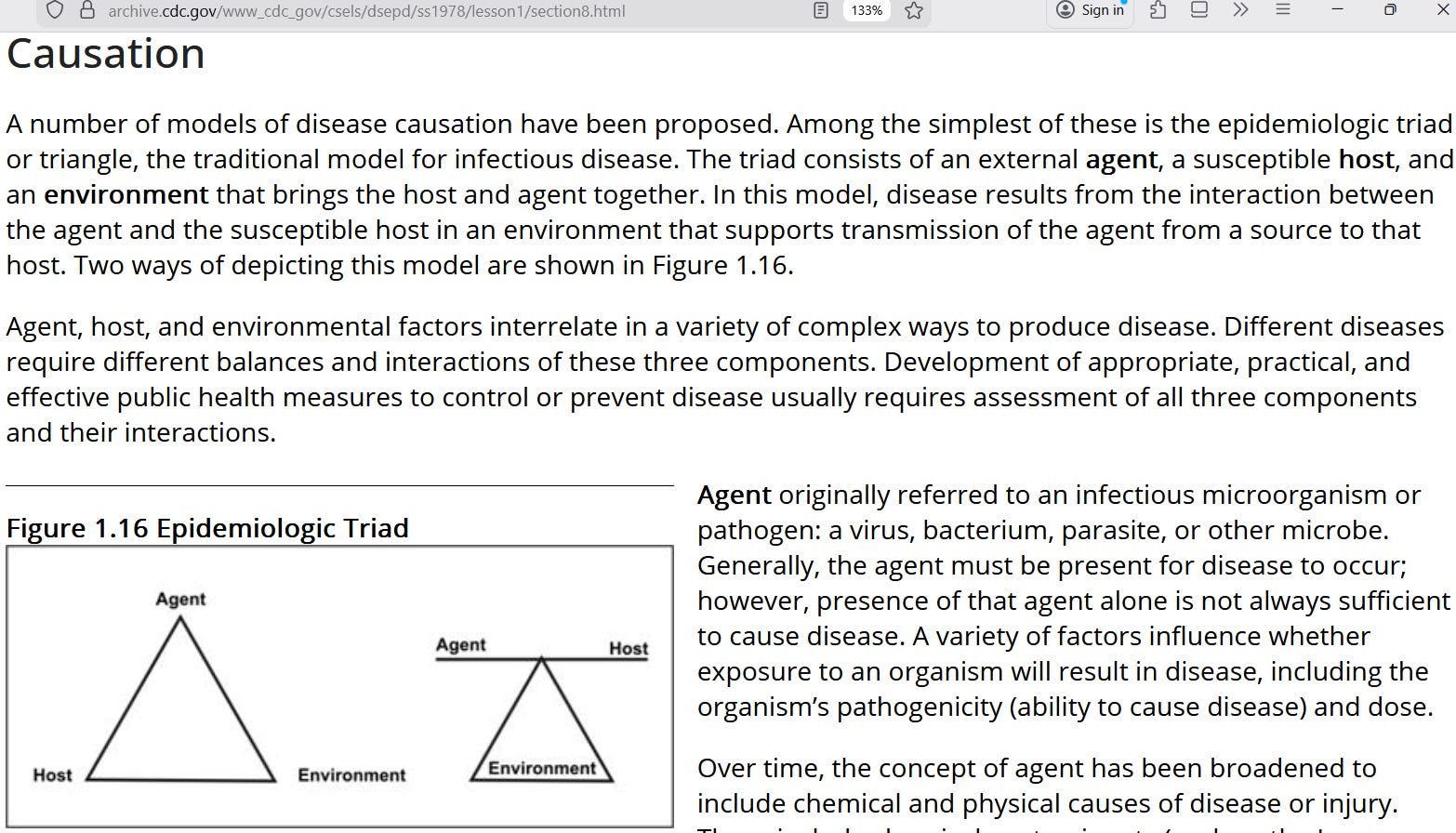
At bottom left you can see that 3 factors must all be aligned in order to be able to create disease in a person: the pathogenic agent, the host (the person), and the environment. A real-life example which contradicts (and thereby disproves) Germ Theory would be the differential susceptibility to malaria with Sickle Cell trait.
There are many other examples that prove that it is “wrong” to focus on the bugs, instead of the on the Triad, but that has not stopped industry from overplaying their hand and trying to scare everyone that the bugs are coming and that they will make us all ill. To get an idea of actual illness, look to the placebo groups in flu vaccine trials:
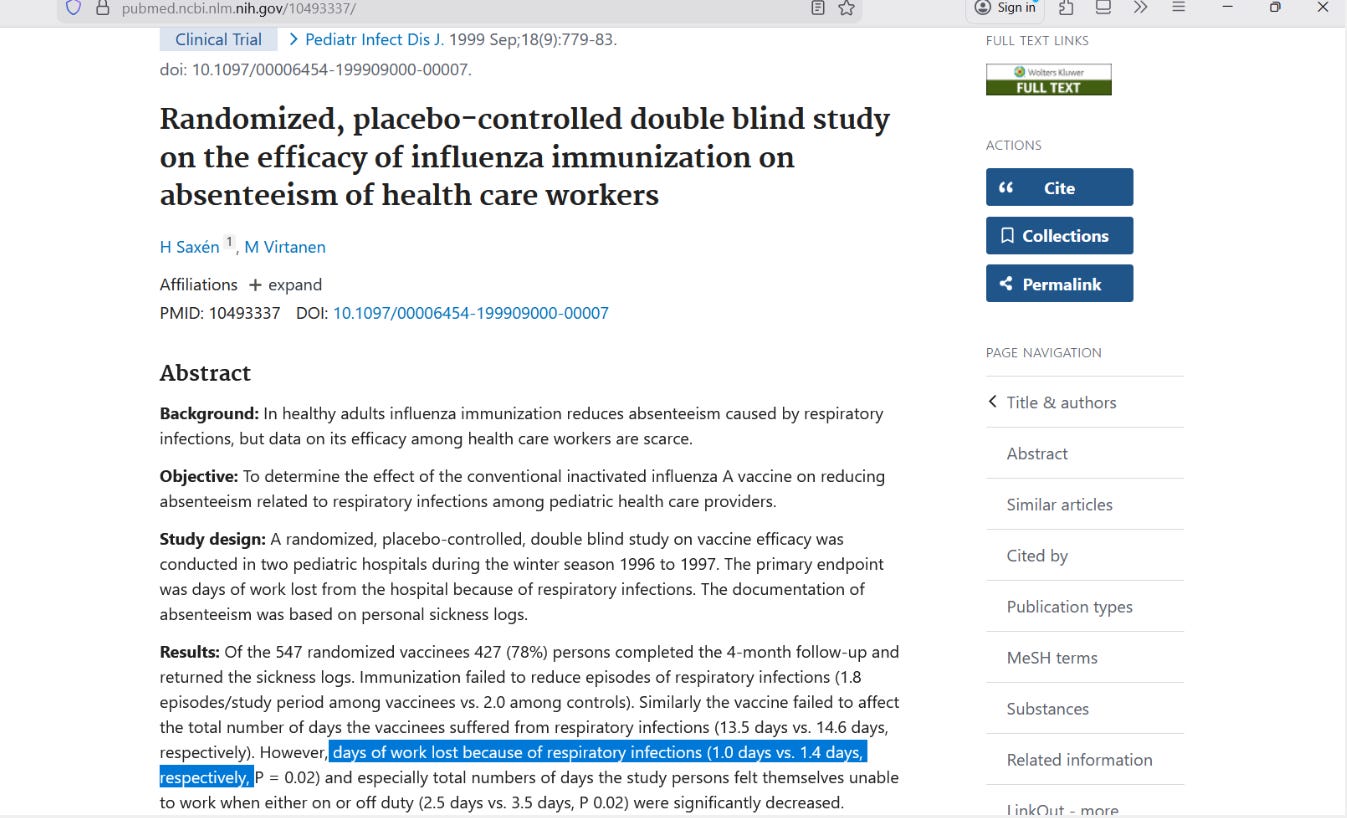
If you follow 152 persons for a four-month winter season, you find out that you will only have found 1 single workday lost due to respiratory infections (or 1.4 days if you follow ~213 persons). This means that respiratory infections are “not a big deal.” Even in the susceptible young, a flu season comes with well under 1% risk of hospitalization.
Here are the annual flu attack rates in the very young:
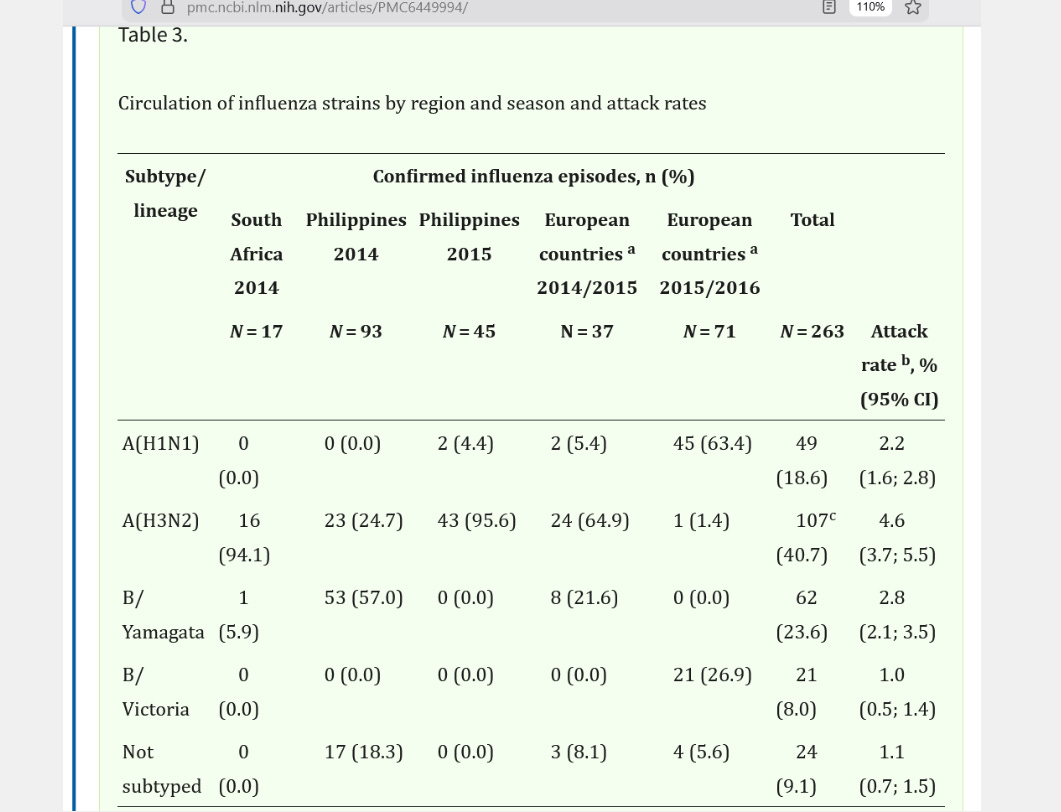
If you sum up the right-most column of percentages, you arrive at 11.7% of very young children coming down with flu — but only 1.1% of that 11.7% end up hospitalized. If you follow 777 very young children for a year, then 776 of them will have been found to have escaped being hospitalized for flu — i.e., a “flu shot” is not needed for them.
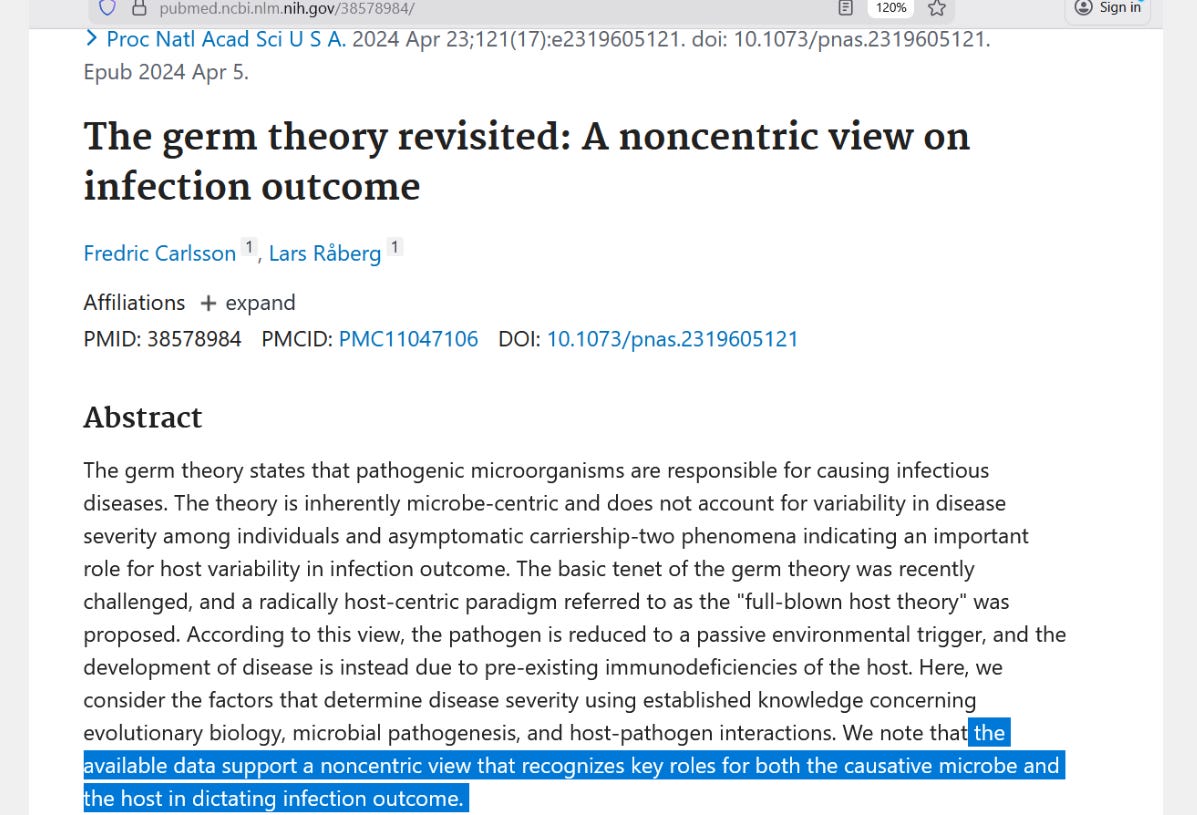
Instead of the “microbe-centric” Germ Theory, recent evidence reveals that the noncentric Epidemiologic Triad was the correct scientific position on infectious disease all along:
This opens the door to immune-fortifying behaviors, such as getting sunlight or, at the very least, taking thousands of international units of vitamin D every day (at least every day during non-summer months). It also closes the door to “pandemic preparedness” which is hyper-focused on the bugs. Bugs hardly ever, on their own, cause disease.
Reference
[origin of Germ Theory] — https://www.popsci.com/science/germ-theory-of-disease-origin/
[Epidemiologic Triad has more explanatory power than Germ Theory does] — https://archive.cdc.gov/www_cdc_gov/csels/dsepd/ss1978/lesson1/section8.html
[in 152 persons, only 1 workday is lost all season from respiratory infection] — Saxén H, Virtanen M. Randomized, placebo-controlled double blind study on the efficacy of influenza immunization on absenteeism of health care workers. Pediatr Infect Dis J. 1999 Sep;18(9):779-83. doi: 10.1097/00006454-199909000-00007. PMID: 10493337. https://pubmed.ncbi.nlm.nih.gov/10493337/
[in very young children 776 out of 777 escape flu hospitalization each year] — El Guerche-Séblain C, Moureau A, Schiffler C, Dupuy M, Pepin S, Samson SI, Vanhems P, Schellevis F. Epidemiology and burden of influenza in healthy children aged 6 to 35 months: analysis of data from the placebo arm of a phase III efficacy trial. BMC Infect Dis. 2019 Apr 4;19(1):308. doi: 10.1186/s12879-019-3920-8. PMID: 30947693; PMCID: PMC6449994. https://pmc.ncbi.nlm.nih.gov/articles/PMC6449994/
[evidence does not back Germ Theory, but does back the Epidemiologic Triad] — Carlsson F, Råberg L. The germ theory revisited: A noncentric view on infection outcome. Proc Natl Acad Sci U S A. 2024 Apr 23;121(17):e2319605121. doi: 10.1073/pnas.2319605121. Epub 2024 Apr 5. PMID: 38578984; PMCID: PMC11047106. https://pmc.ncbi.nlm.nih.gov/articles/PMC11047106/
Really strong framing around the Epidemiologic Triad. The asymptomatic carrier point is understated in a lot of public health discourse, bc it undermines the whole microbe=disease narrative. In my experince working with immunocompromised patients, the host factors were always way more predictive than pathogen exposure itself.
Thank you for your substack its not my subject but I find it interesting so i'm learning. I watched a lecture by an immunologist recently and some people can have immunity to Ebola and Rabies. They didn't even know they were exposed/had it, their body cleared it and they were immune, thought that was interesting.
Also most people I know in the dog groups naturally expose their puppies to DHP (Distemper, Hep, Parvo) in the environment and from the MLV vaccine shedding and after MDA has gone to zero (no protection left from mom) their titer rises again from gradual exposure and they become immune without disease in most cases i've ever seen over the years, people have been doing it for a long time.
Ive only had flu once in my life over 50 years ago.