

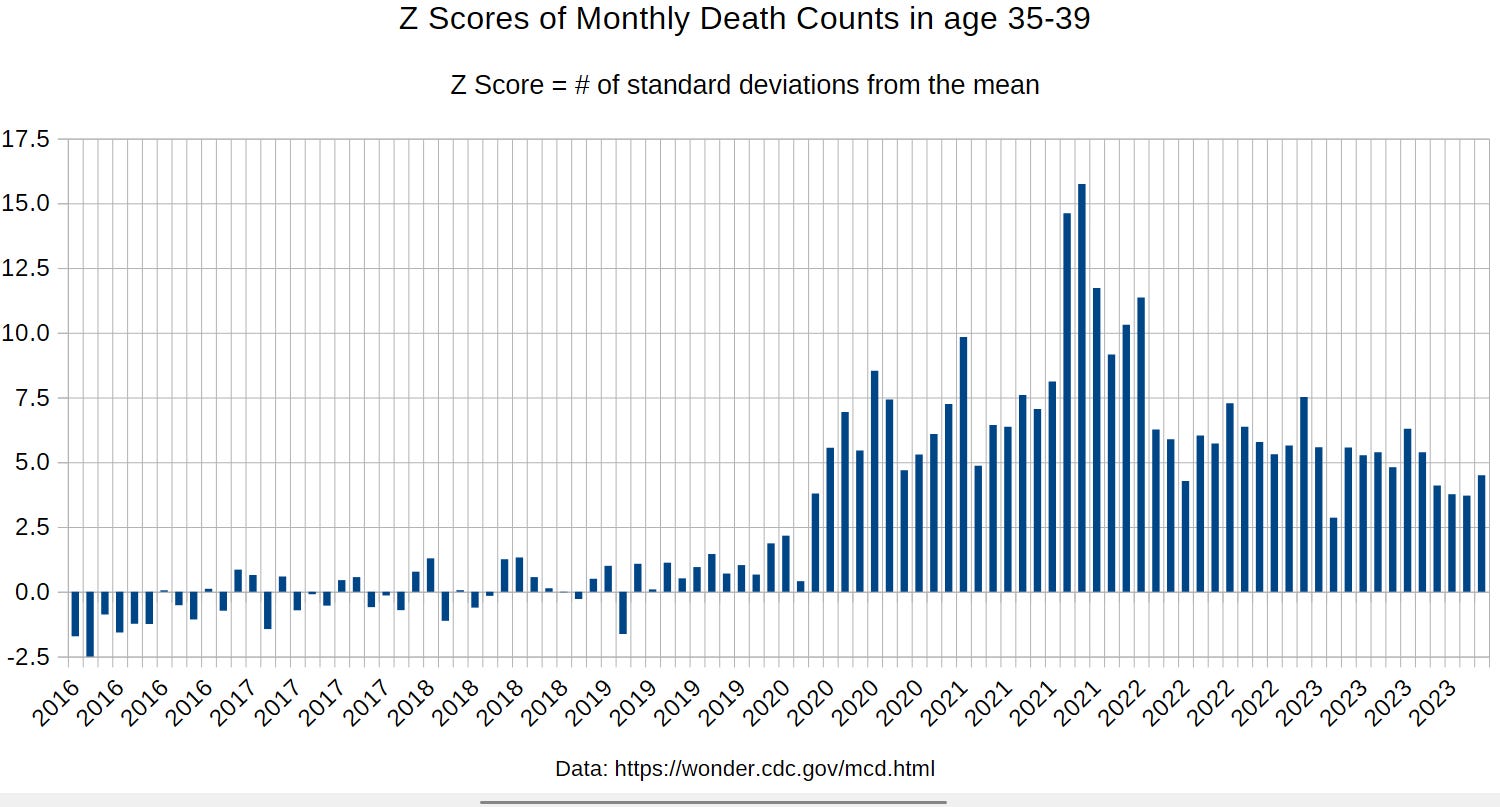
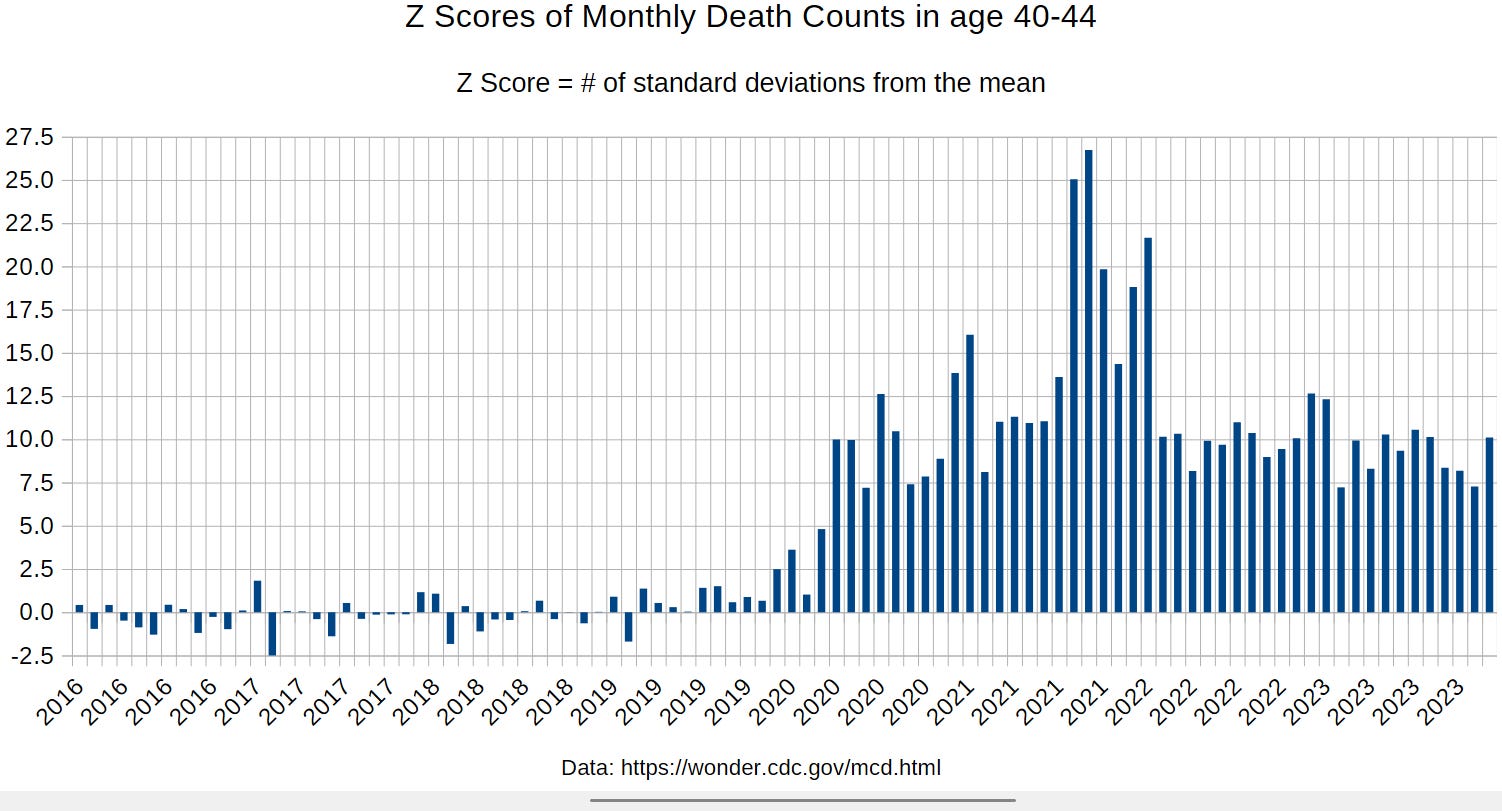
In this prior report, the counts of monthly deaths were reported by narrow age bands. This follow-up analysis shows the deviation in monthly death in terms of standard deviations from the mean (Z score of monthly death), using the years of 2016-2019 as a baseline:
Age 35 to 39
[click to enlarge]
In the fall of 2021, the peak monthly death count in those in age band 35-39 reached 15 standard deviations above the mean, a very serious deviation from usual values. At the end of 2023, monthly death counts were still almost 5 standard deviations above the mean.
Age 40 to 44
[click to enlarge]
In the fall of 2021, monthly death counts in those of age 40 to 44 reached 27 standard deviations above the mean. At the end of 2023, they were still 10 standard deviations above the mean. That sustained elevation in death is very disturbing.
Age 45 to 49
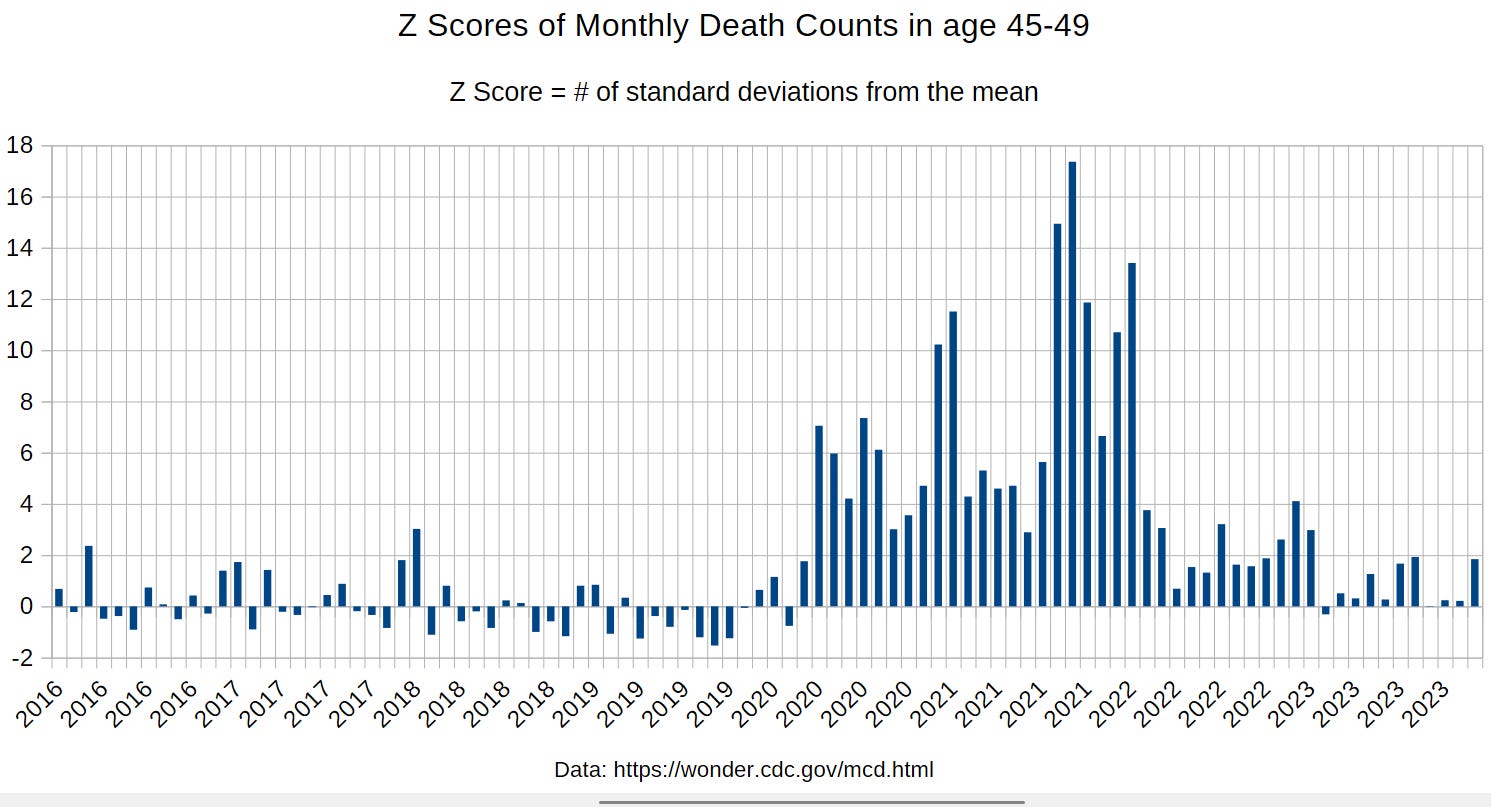
In the fall of 2021, those in the age band of 45 to 49 had monthly death counts that reached 17 standard deviations above the mean, though by the end of 2023, their monthly death counts had returned to normal. It is unclear why there is such a big difference in 2023 in these adjacent age bands.
But the salient point is that it was not until 2021 (after people had begun to take COVID shots) that the extremely high monthly death counts were found.
Reference
https://wonder.cdc.gov/mcd.html
It's late here and I'm not thinking in a focussed way but if the younger cohorts had very high deaths, then this would lead to dry tinder effects in older cohorts as the years roll on due to less reaching the next age group.