
Not Even Correlated?
Post #1539

The cautionary phrase “correlation does not necessarily mean causation” tells us that, if two things “track together,” it may not be the case that one of them is the cause of the other. But while correlation does not “prove” causation, a lack of correlation does “disprove” causation — at least in the observed mix of relevant factors.
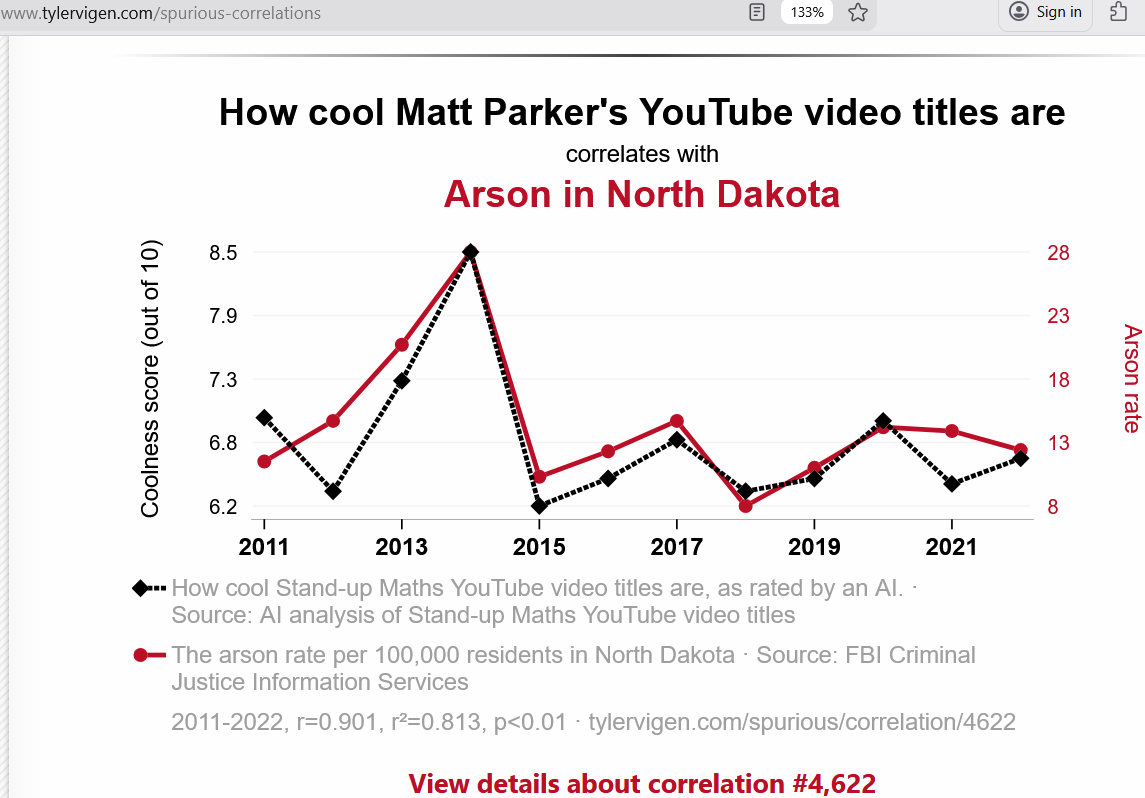
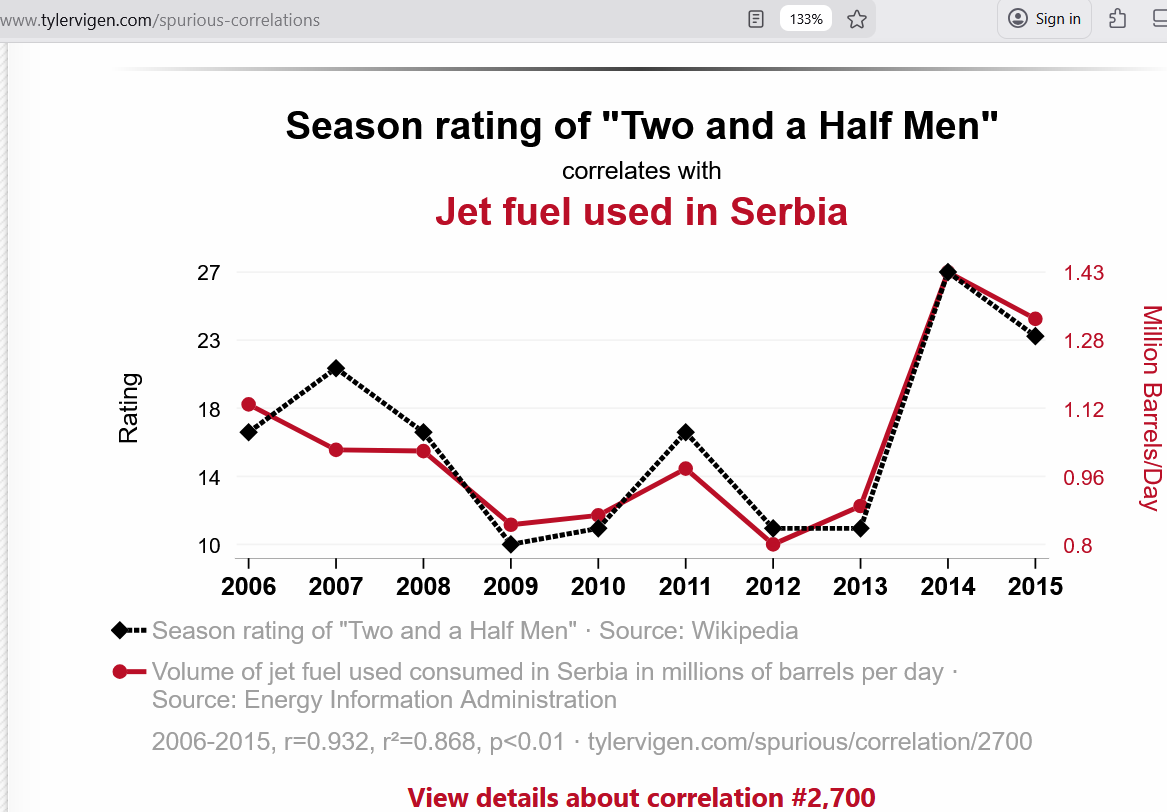
Using the terms “necessary” and “sufficient” — we can say that correlation is not sufficient to entail causation, but that, where causation exists, correlation necessarily follows (you cannot have causation without correlation). Tyler Vigen puts out hilarious instances of two things “tracking together” to warn against ascribing a cause:
YouTube video ratings explain 81% of arson
TV sitcom ratings explain 87% of jet fuel use
UFO sightings explain 88% of name popularity

These examples put the first point to rest: you cannot assume causation from correlation. But the second point is that you cannot have causation without at least having correlation (true causality demands that two things “track together”). In a free economy, healthcare spending can work to keep people healthy:
more healthcare spending = more health
But in a broken or rigged system, the relationship breaks down. The USA has recently become an outlier regarding the relation of spending to health:
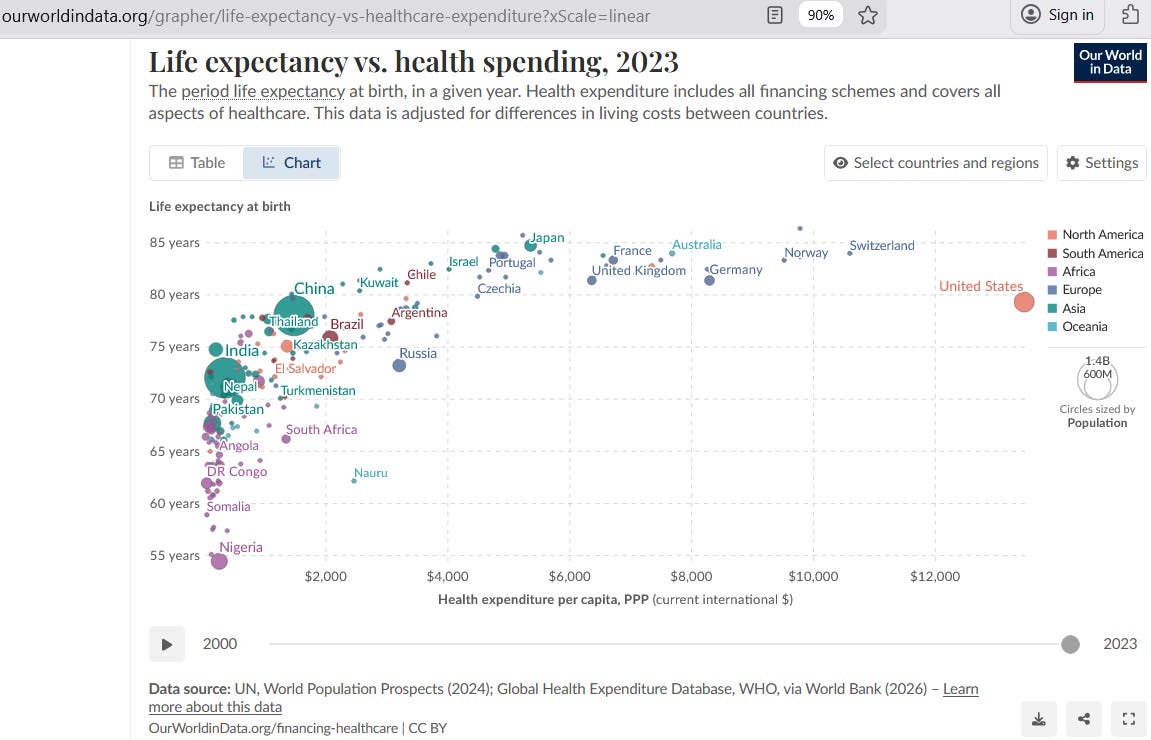
According to what we spend, our life expectancy should be higher than 100 years, not lower than 80 years. Here are levels of U.S. healthcare spending per person vs. life expectancy from 1970 to 2023, with the general trend of healthcare spending going up each additional year as time goes by:
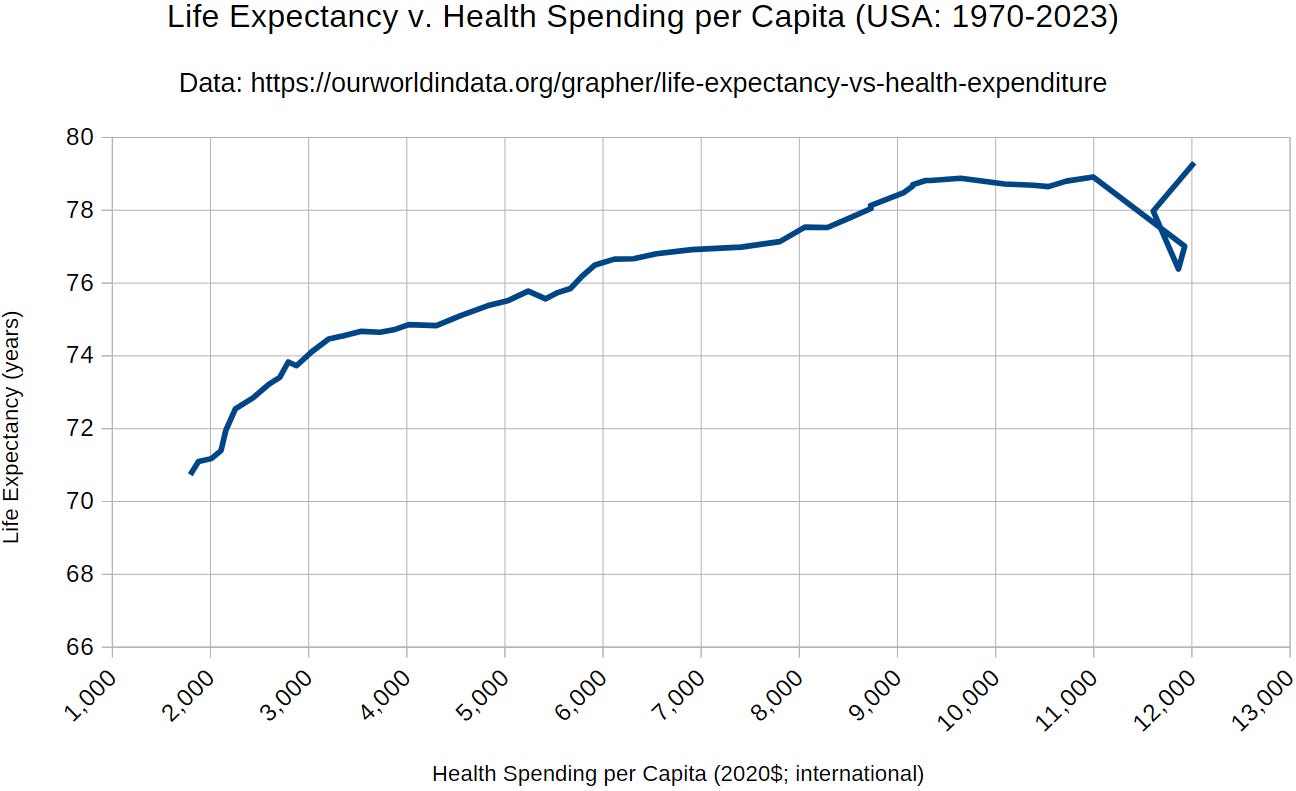
The year of 1970 is represented at the left edge of the line, and increases in healthcare spending back then were related to increases in life expectancy back then — indicating that the U.S. healthcare system had not yet become broken or rigged so as to begin to actually work against the average American. Recent years tell the story:
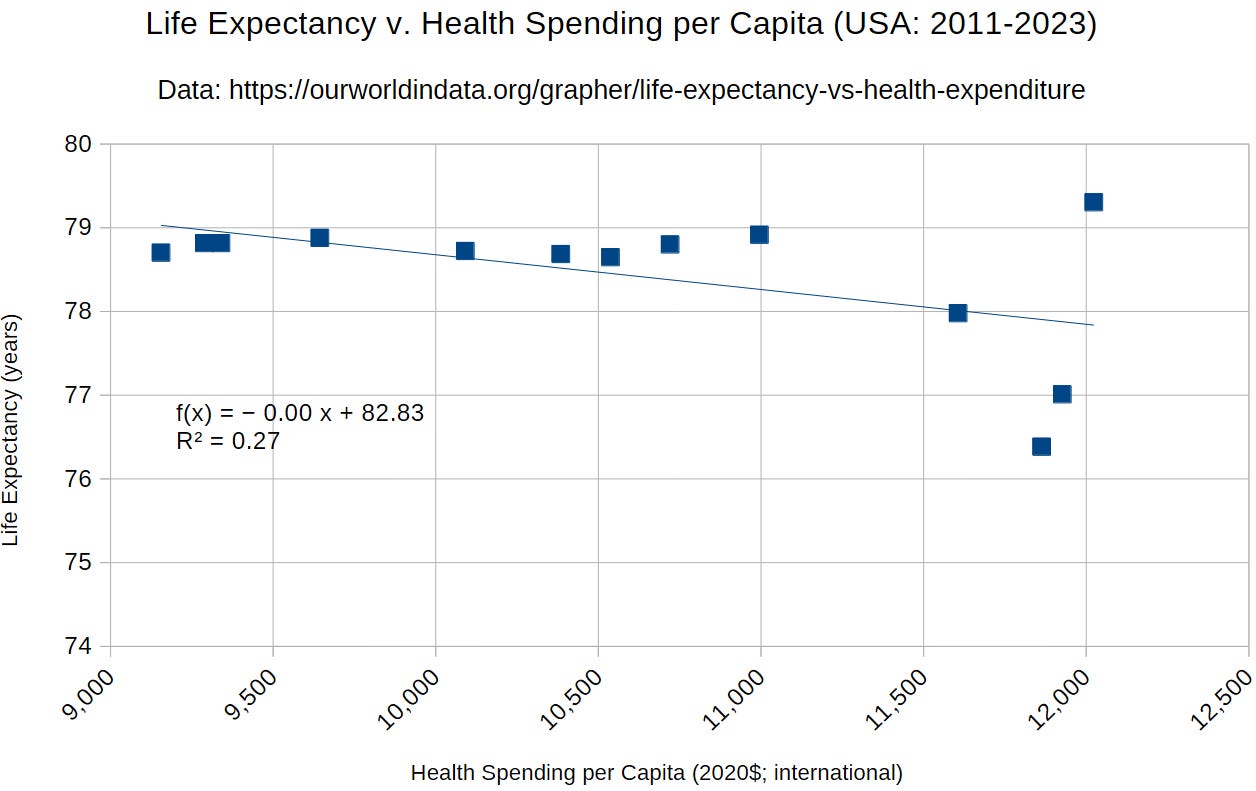
After ObamaCare passed in 2010, increases in healthcare spending have not led to any increases in life expectancy. This type of a positive relationship (a “positive correlation”) is required whenever the extra spending causes extra health or life expectancy. The lack of the correlation proves that the spent dollars are not helping.
Even worse is the relationship of actual health and health spending, using years of healthy life (before disease sets in):
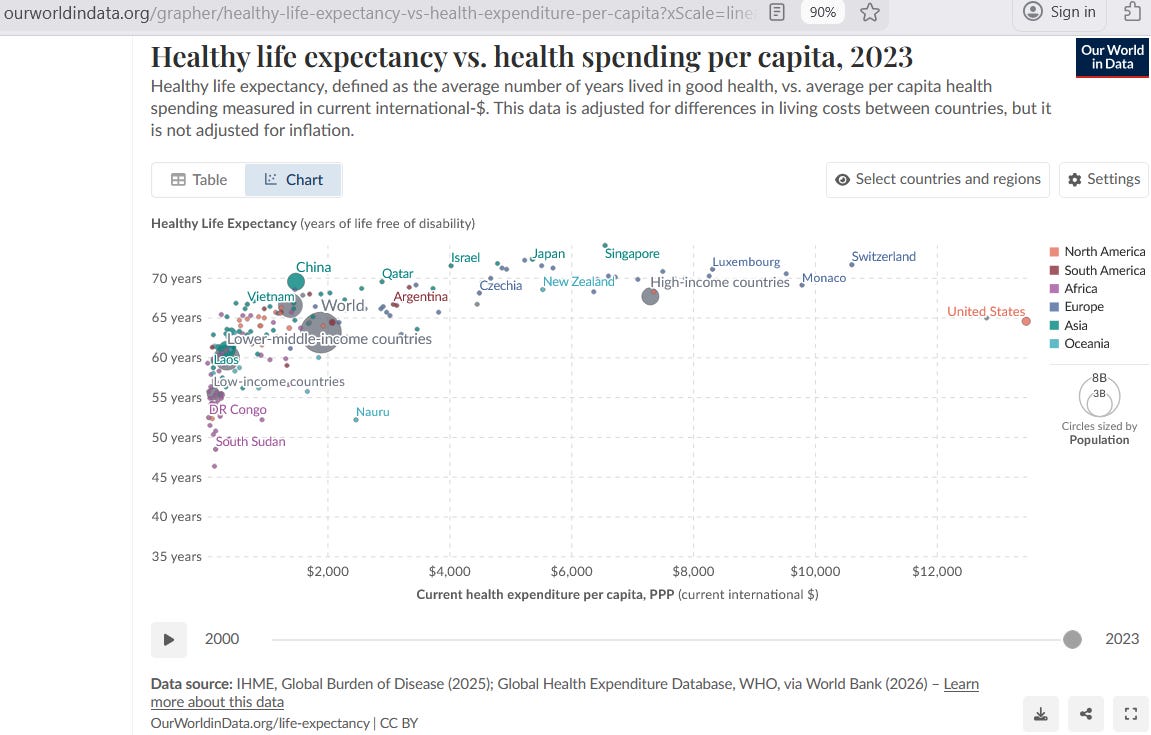
The evidence suggests not only that ObamaCare needs to “go away” but also that the federal government needs to divest itself from the business of administering and regulating healthcare. Markets, not governments, should be controlling how healthcare is being practiced. Government control has led to our current debacle.
One of the main ways that government causes problems is by way of “public-private partnerships” — sometimes called “state corporatism” but also called “fascism.” When government inserts itself into business where it does not belong, people often suffer. There was no granting of any federal healthcare power in the U.S. Constitution.
While we currently have a good guy (RFK Jr.) in charge of HHS, this does not mean that the bad guys won’t take over once again, and create the same kind of havoc — or maybe even worse havoc — as that which they created after ObamaCare was passed.
Reference
[spurious correlations from Tyler Vigen] — https://www.tylervigen.com/spurious-correlations
[health spending versus life expectancy] — https://ourworldindata.org/grapher/life-expectancy-vs-health-expenditure
[health spending versus health expectancy] — https://ourworldindata.org/grapher/healthy-life-expectancy-vs-health-expenditure-per-capita?xScale=linear