
Vitamin Dosing
Post #1517

Periodically, you will get some researcher who claims to have discovered that vitamins do not keep you well (i.e., that they do not ward-off acute respiratory infections), but either ignorance or trickery likely plays an oversized role in the forming of those conclusions. This post will focus on vitamins C and D.
Vitamin C
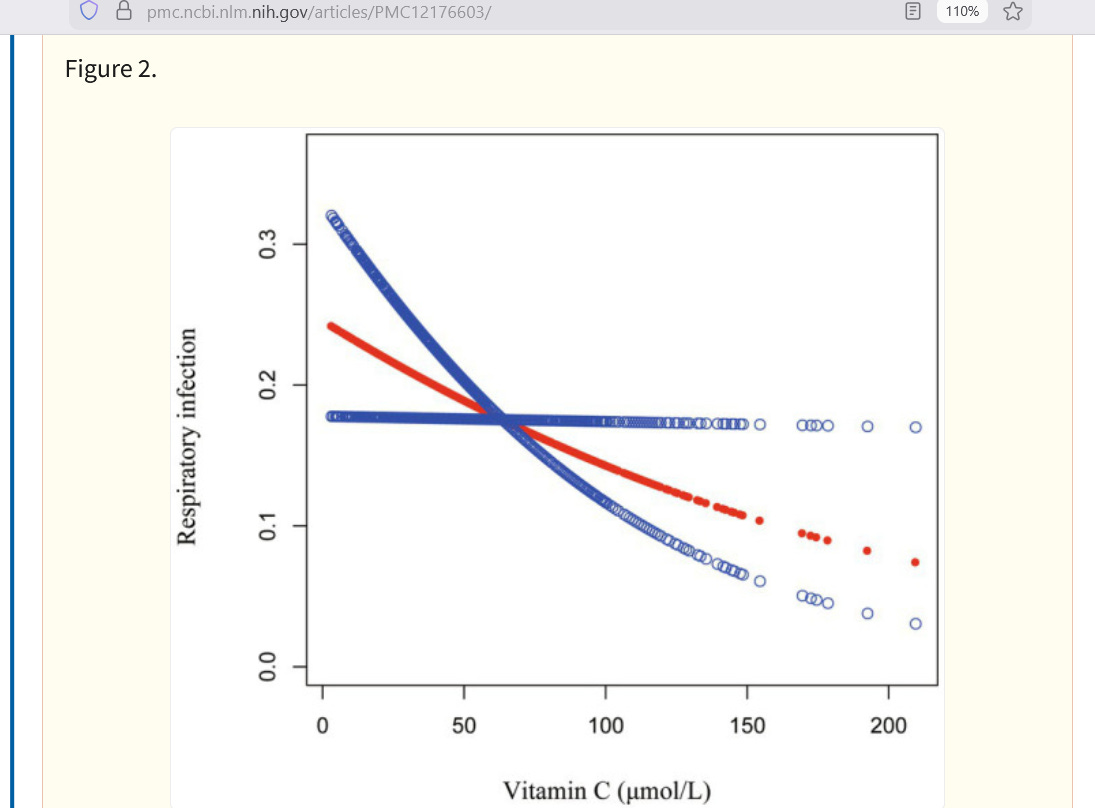
Normal serum vitamin C levels are about 60-70 micromoles per Liter (umol/L), where the lines cross in the image above. This study — showing that high levels of vitamin C cut infection risk by over half — was in kids. Obtaining values above 200 umol/L at the right side of the graph takes “work.” Here is how to do it with adults:
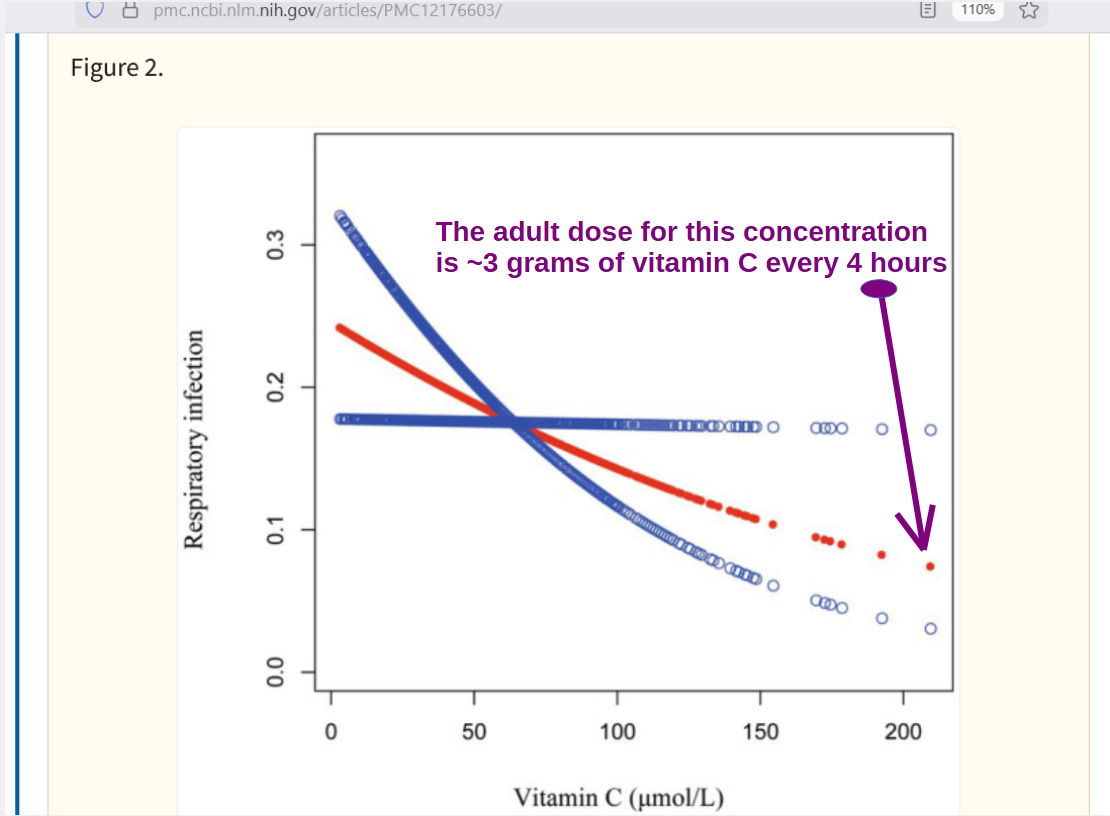
You won’t “naturally” find yourself to be walking around with serum vitamin C levels above 200 umol/L, but if you work at it, you can get there. Adults of lower body weight might be able to get there with just 2 grams (2,000 mg) of vitamin C every 4 hours. But that is only if you want to cut your risk of respiratory infection by more than half.
Here is how to obtain 220 umol/L with oral dosing of vitamin C:
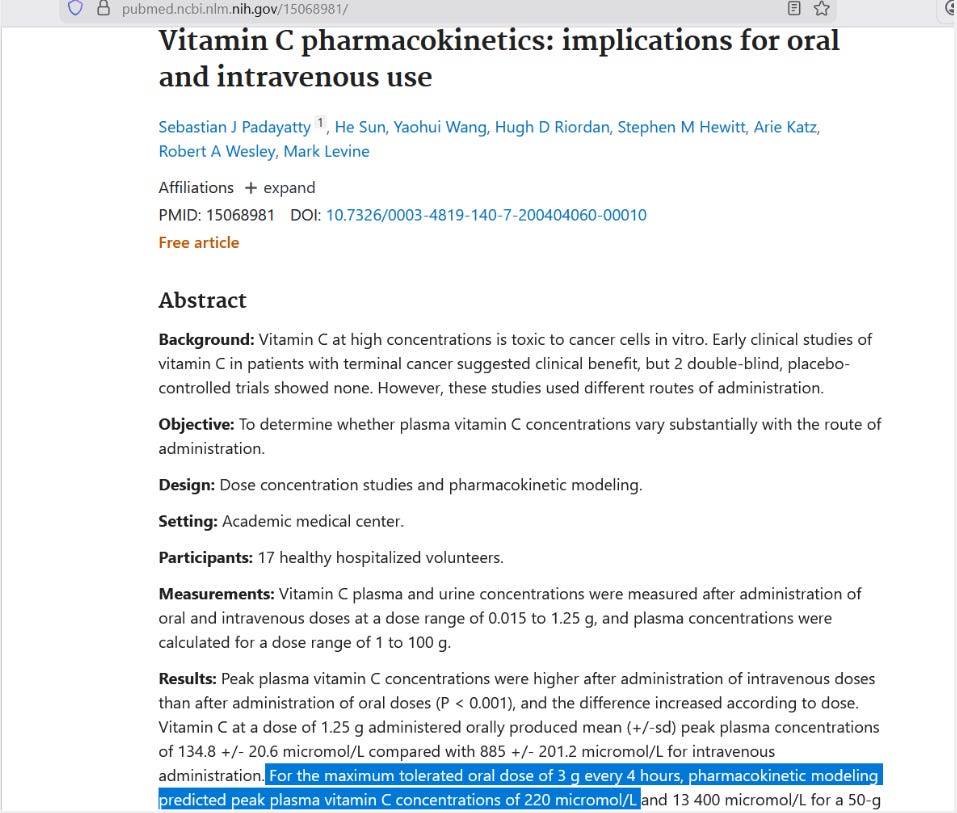
So, the next time that you hear a Ph.D. medical researcher proclaim that vitamin C does not cut respiratory infection risk, then ask him or her: But what serum level are we talking about? Did you even bother to measure serum levels in your study?
Vitamin D
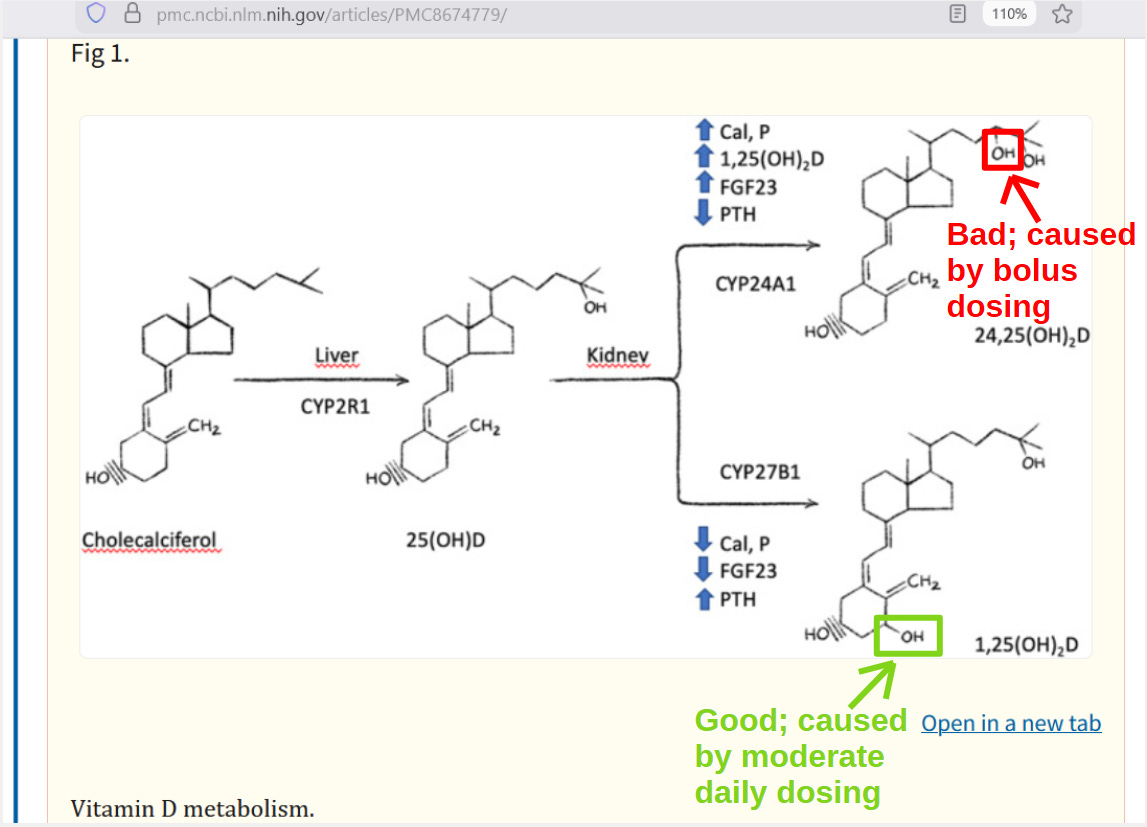
Vitamin D dosing is especially disingenuous in published research, because so many researchers have published so many studies with bolus (very large) dosing. Instead of needing big doses as you do for vitamin C, to get and stay infection-free with vitamin D requires moderate dosing. Large (bolus) doses can lead to negative effects:
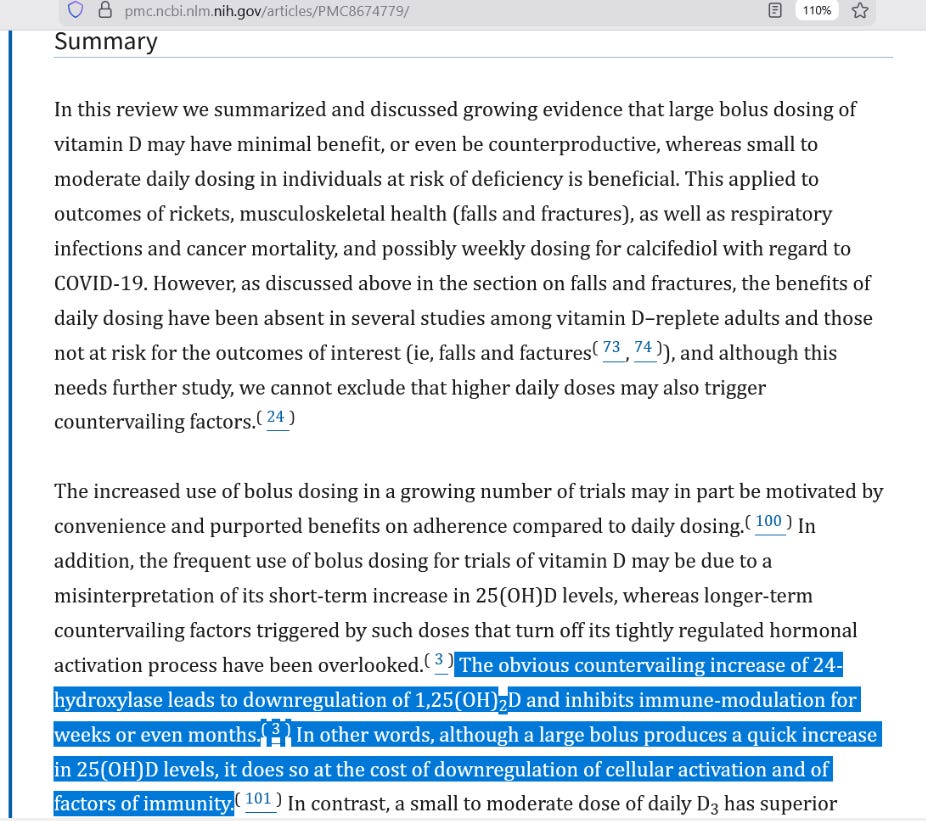
The highlight mentions up-regulation of 24-hydroxylase, also known as CYP24A1. This enzyme diverts the metabolic pathway so that fully active vitamin D — 1,25-dihydroxyvitamin D (bottom right below) — cannot dominate the end products:
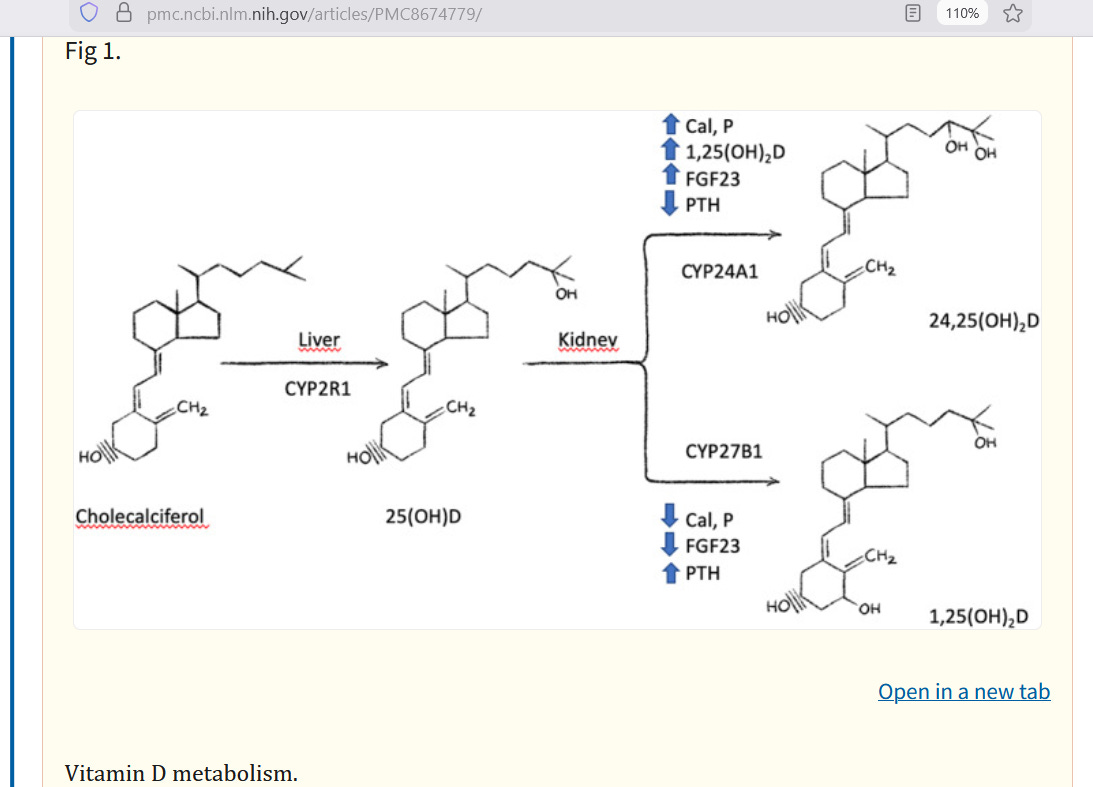
Here is the same flow chart with notes added in:
Knowing that very large (bolus) doses can zap your immunity, it is very frustrating that researchers keep publishing results of those high doses — almost as if, from the outset, they are trying to give vitamin D a bad name. Here is research on one-year-olds receiving huge doses of 100,000 IU:
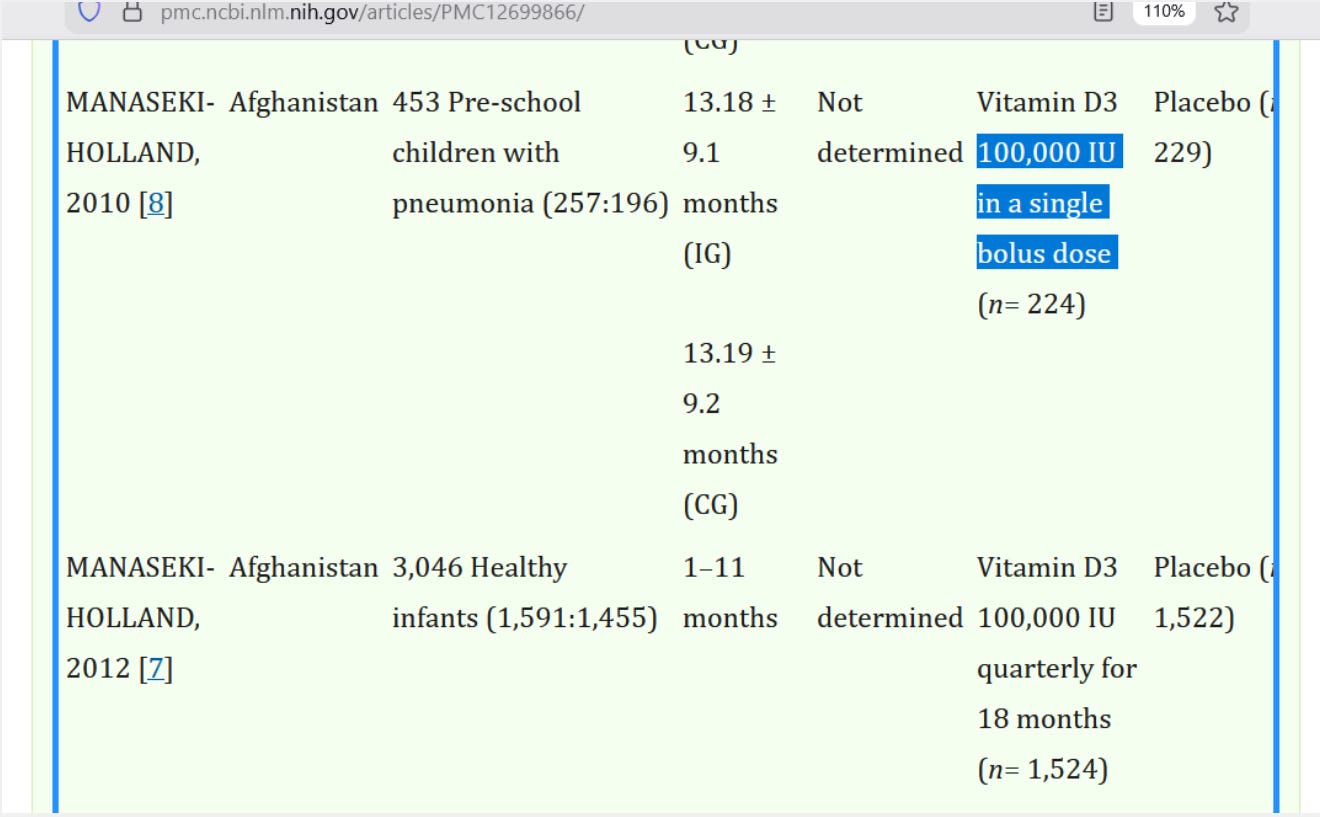
Those tiny kids can’t handle doses that large, and even in adults, that dose is approximately the highest-ever dose that you ever want to try to give out (runs the risk of up-regulation of 24-hydroxylase; leading to down-regulation of immunity). It is no wonder that the scientific review said vitamin D does not work, given such high doses:
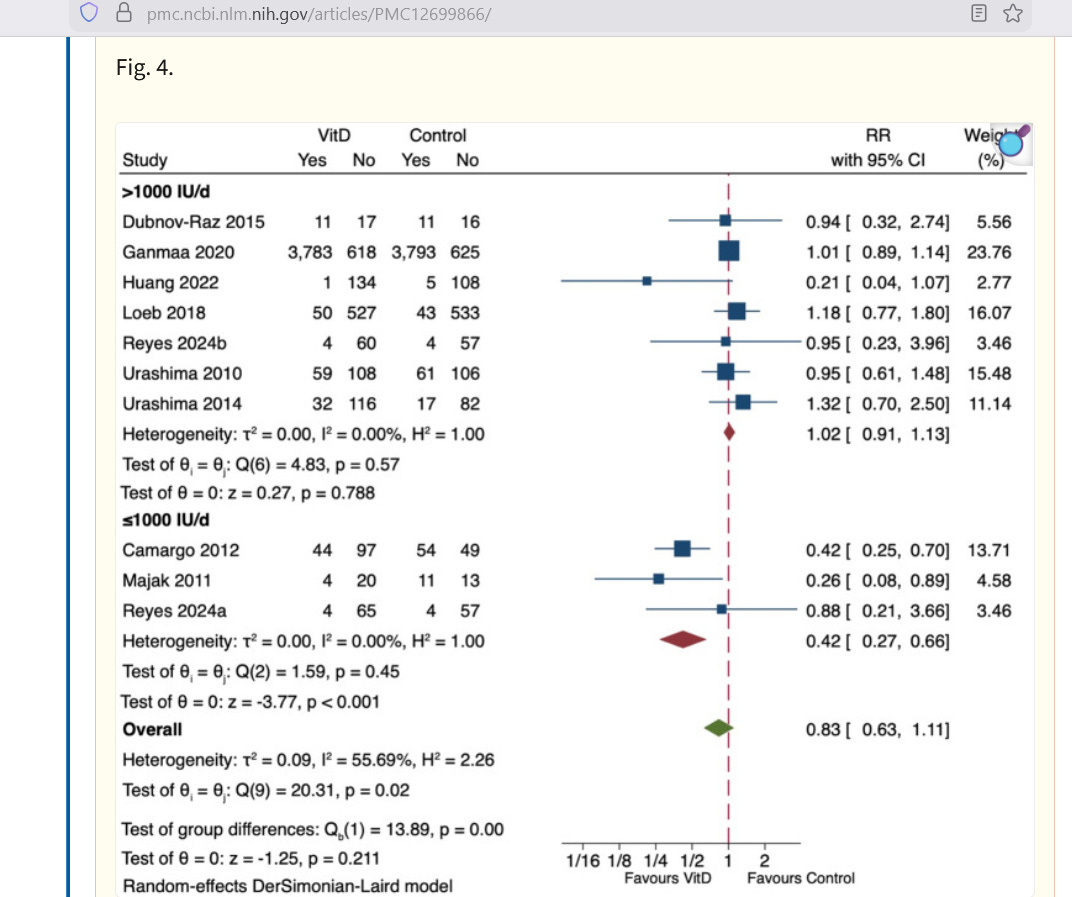
But check out the subgroup analysis performed on just those studies which did not overdose young children with vitamin D (red diamond). Those studies show that moderate doses led to a 58% cut in infection risk (RR=0.42). In other words, just like with vitamin C, vitamin D can cut your risk of respiratory infection by more than half.
These are the types of findings that could put vaccine firms out of business.
Vitamin D works in adults, too:
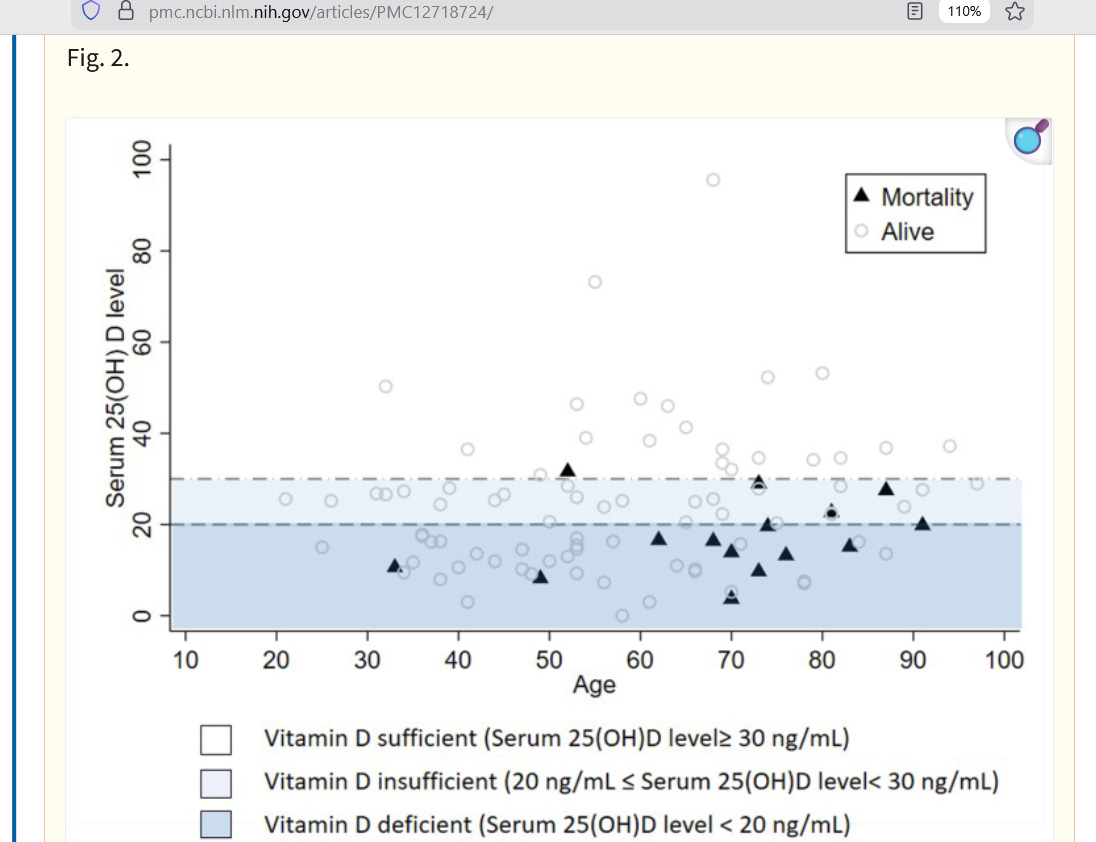
In this COVID study in Taiwan, only people with serum 25-hydroxyvitamin D levels below 40 ng/mL ended up dying (black triangles). No person with 40 ng/mL or above died (open circles). This is expected because approximately 42 ng/mL optimizes white cell function. The highest fraction of people dying were the ones below 20 ng/mL.
The evidence suggests that vitamins can put vaccines out of business, but that researchers have been largely either ignorant or dishonest when reporting on the doses, in order to produce the appearance that vitamins cannot keep you well. Other nutrients like zinc are as important as vitamins C and D. Good nutrition “works.”
Reference
[high levels of vitamin C cut respiratory infection risk by more than half] — Li C, Zhu Z, Jiang S, Feng X, Gao K, Li T, Yang L, Fang P, Yang J. The association between serum vitamin C levels and respiratory infections in children and adolescents. Front Nutr. 2025 Jun 5;12:1601218. doi: 10.3389/fnut.2025.1601218. PMID: 40538585; PMCID: PMC12176603.
[taking vitamin C every 4 hours gets your serum level way up there] — Padayatty SJ, Sun H, Wang Y, Riordan HD, Hewitt SM, Katz A, Wesley RA, Levine M. Vitamin C pharmacokinetics: implications for oral and intravenous use. Ann Intern Med. 2004 Apr 6;140(7):533-7. doi: 10.7326/0003-4819-140-7-200404060-00010. PMID: 15068981.
[bolus doses of vitamin D are bad for you, and researchers should stop using them] — Mazess RB, Bischoff-Ferrari HA, Dawson-Hughes B. Vitamin D: Bolus Is Bogus-A Narrative Review. JBMR Plus. 2021 Oct 30;5(12):e10567. doi: 10.1002/jbm4.10567. PMID: 34950828; PMCID: PMC8674779.
[moderate doses of vitamin D cut children’s infection risk by more than half] — Wang L, Yu Y, Liu K, Yu X, Li Y. The role of vitamin D in the prevention and treatment of acute respiratory infections in pediatric populations: a systematic review and meta-analysis of randomized controlled trials. BMC Pediatr. 2025 Dec 12;25(1):985. doi: 10.1186/s12887-025-06361-6. PMID: 41387808; PMCID: PMC12699866.
[40 ng/mL of serum vitamin D prevented people from dying of COVID] — Sheng CC, Su SY, Liang Y, Cheng HC, Huang HY, Chiu HH. Association between vitamin D and COVID-19 infection and mortality in Taiwanese patients. J Chin Med Assoc. 2025 Nov 1;88(11):887-893. doi: 10.1097/JCMA.0000000000001294. Epub 2025 Sep 12. PMID: 40937665; PMCID: PMC12718724.
Good info! Thanks!
It's very difficult to trust anyone due to all the conflicting info out there, not just on dosing, but it, or part of it, vitD, being in rat poison. Ignorance or dishonesty - I'd say both, with the ignorant ones never questioning anything, because they trust completely.