
Electro-smog in the UK
Post #1492

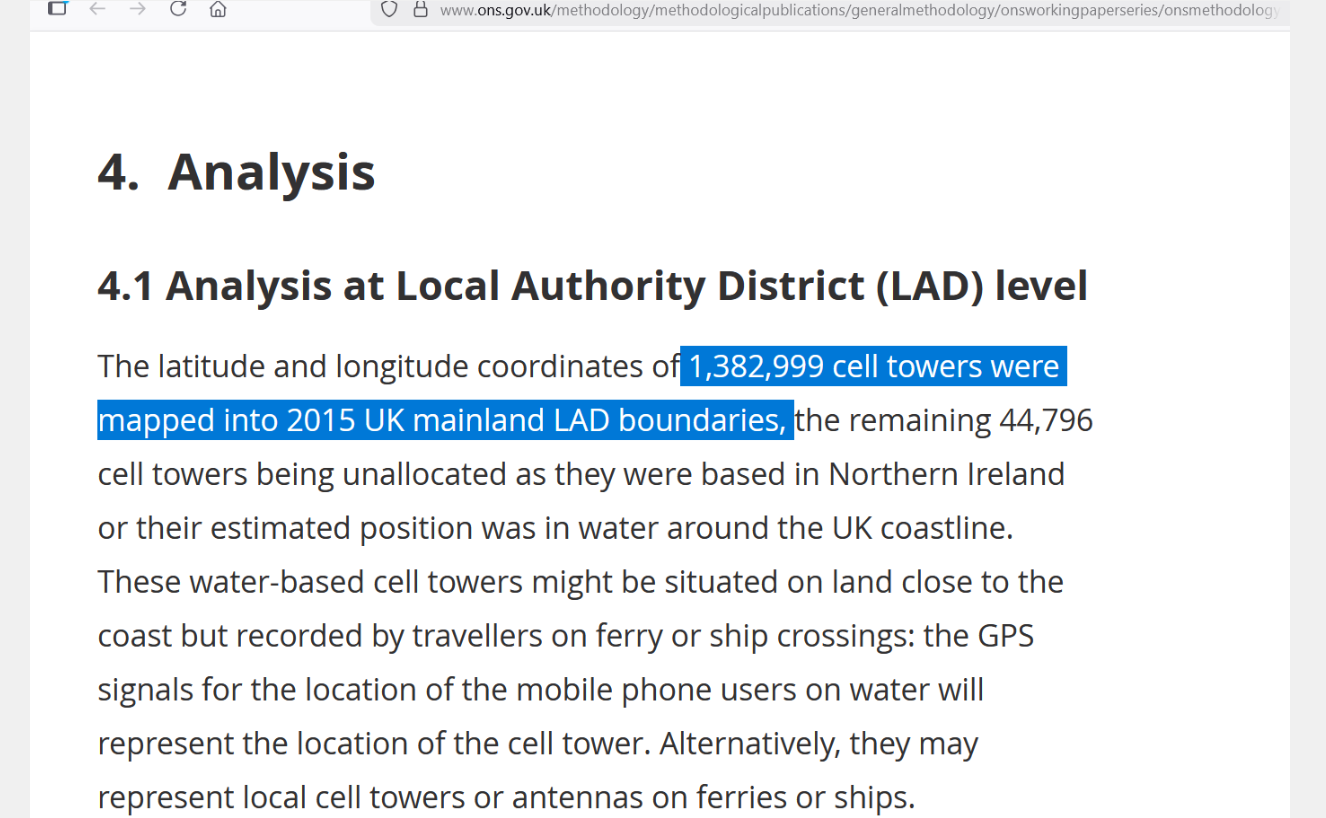
Electro-smog is a term for electromagnetic radiation which constantly emanates from cell towers, from cell phones, and wi-fi routers, and smart-meters, and televisions, and laptops, etc. As I first wrote here, the UK is a nation with lots of electro-smog, due to the density of cell towers in the Local Authority Districts (LAD) on the mainland:
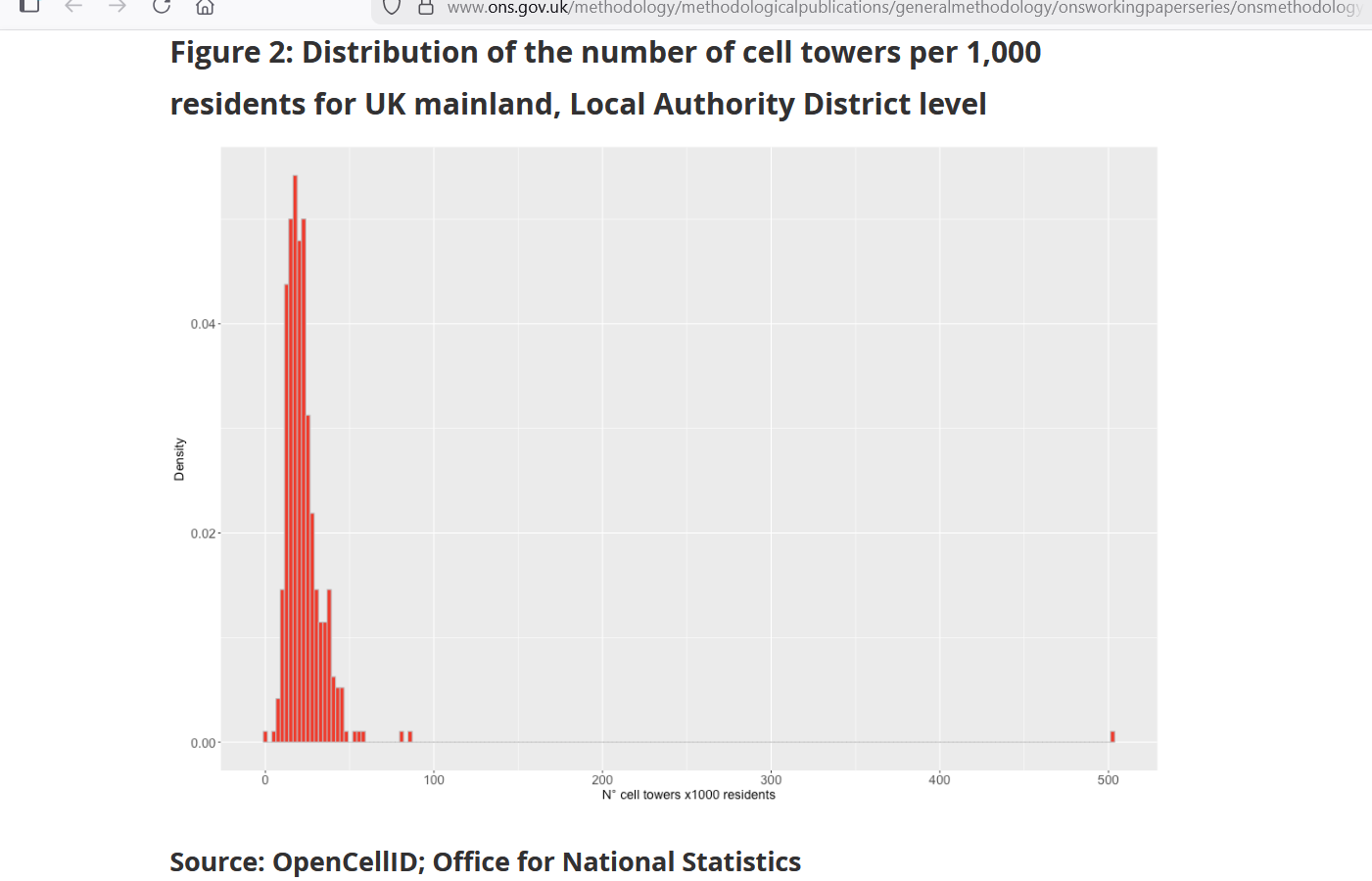
Using data from 2015, the highest ratio of cell towers-to-persons was 500 cell towers per 1,000 persons, shown at far right below (a cell tower for every two persons):
But when you constantly expose human beings to that much wireless radiation, there is a very real risk that you will increase the incidence of a brain cancer called glioma, a high grade (Grade 4) version of which is glioblastoma. Having higher cell tower density per citizen than Canada and the USA, look at the trend in glioblastoma there:
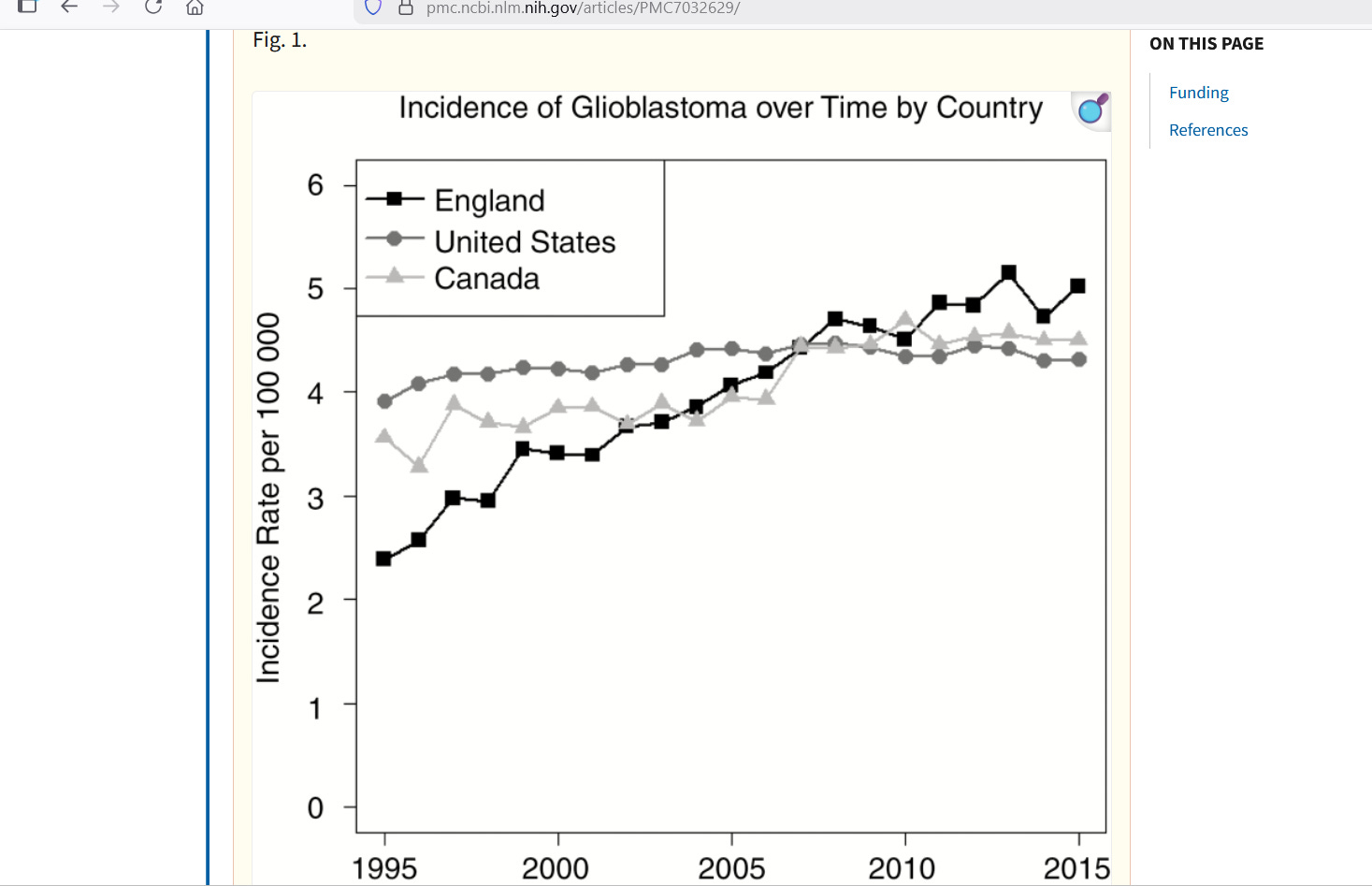
Notice how glioblastoma rates in the UK have more-than-doubled in the 20 years from 1995 to 2015, just as the density of cell towers there has been increasing.
The evidence suggests that the UK is “over-exposing” its own citizens to wireless radiation, and that that high dose of wireless radiation is giving them one of the highest glioblastoma rates in the world. Over 90% are dead within 5 years.
Local citizens should always have a say over whether another cell tower will be allowed to be erected near them. Where there is risk, there must be choice.
Reference
[up to one cell tower for every two persons in the UK by 2017] — https://www.ons.gov.uk/methodology/methodologicalpublications/generalmethodology/onsworkingpaperseries/onsmethodologyworkingpaperseriesnumber13comparingthedensityofmobilephonecelltowerswithpopulationestimates
[glioblastoma rates in the UK have more than doubled in 20 years] — Davis FG, Smith TR, Gittleman HR, Ostrom QT, Kruchko C, Barnholtz-Sloan JS. Glioblastoma incidence rate trends in Canada and the United States compared with England, 1995-2015. Neuro Oncol. 2020 Feb 20;22(2):301-302. doi: 10.1093/neuonc/noz203. PMID: 31786602; PMCID: PMC7032629. https://pmc.ncbi.nlm.nih.gov/articles/PMC7032629/