
Practical Reform
Post #1508

As stated in this earlier essay, the USA is running toward the edge of a fiscal cliff, and correct solutions are known but the stick-point in implementation is the generation of political will to do those right things which will save our nation. Mattias Desmet recently wrote about the political and philosophical implications of the Epstein Files.
In that essay, Mattias brings up a 1922 publication by Walter Lippmann that wrestled with the question of democracy (“rule of the mob”) vs. technocracy (“rule of the experts”). A problem of technocracy is that it devolves into plutocracy (“rule of the rich”) or, even more specifically, kleptocracy (“harsh rule of rich robbers/thieves”).
Lippmann did not understand that there was a third way until approximately 1955 so, back in 1922, he was still operating under the philosophical ignorance of a false dichotomy: you have to pick whether you want to be ruled-by-the-many or ruled-by-the-few. Besides Rule of the Many and Rule of the Few, a third option is Rule of Law.
While it is very easy to implement Rule of the Many or Rule of the Few (just by doing what the majority wants, or by doing what the few want), it requires thoughtful diligence to implement a Rule of Law. You have to provide safety valves in the system to address those times and places when a short-sighted self interest inserts itself.
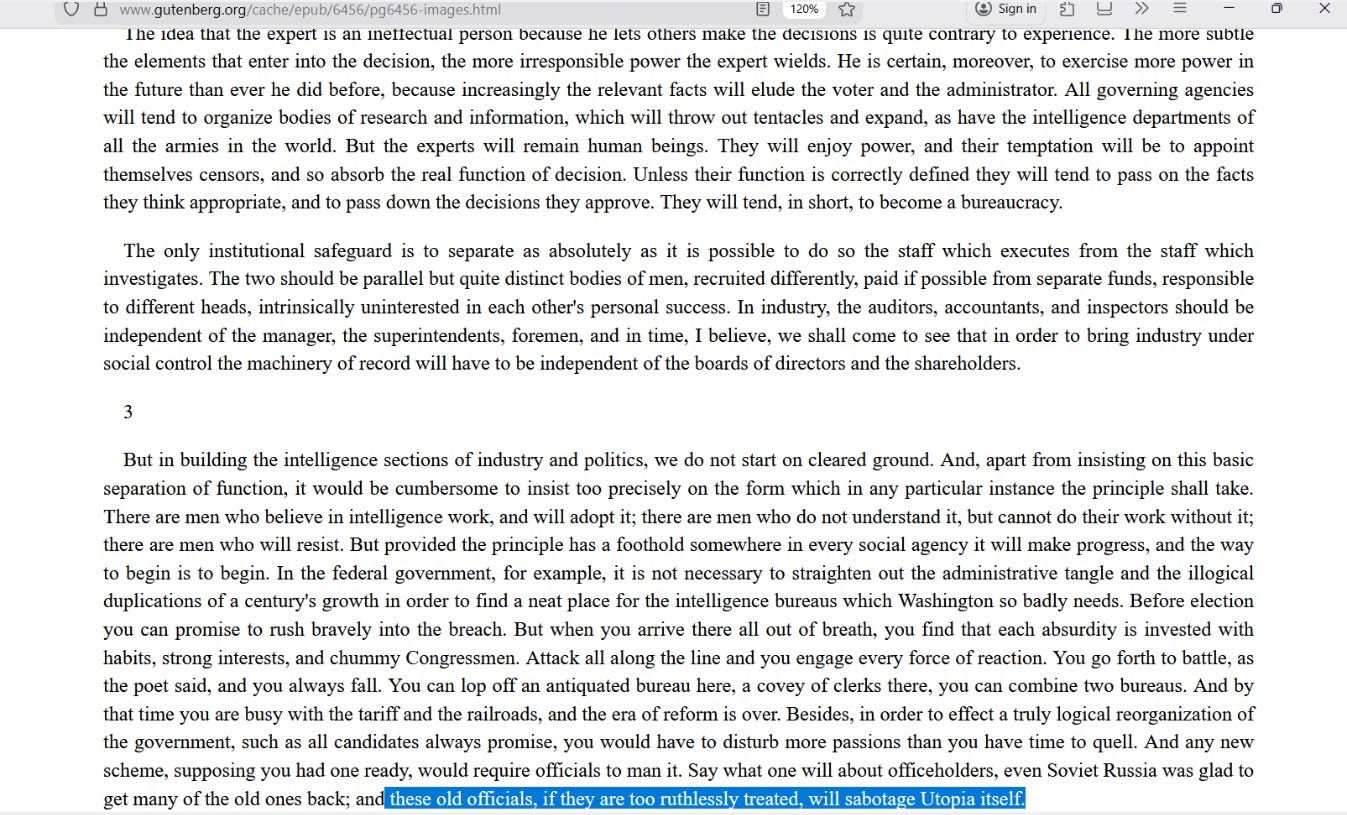
Here is Lippmann warning that, if you try to break up an entrenched bureaucracy, then they will attempt to burn your whole house down:
[click to enlarge]
When Lippmann says that officials will sabotage Utopia itself, it means that, if you try to take certain people out of a prior position of power, then they will try to destroy the entire system of wealth creation, just to be able to thwart you. Non-dangerous control freaks are those that say:
“If I am not in charge, then I am not interested.”
But bureaucracies are littered with dangerous control freaks, whose motto is:
“If I am not in charge, then I will burn this entire city to the ground.”
Addressing these dangerous control freaks — dubbed as “spiteful competitors” by Game Theory researchers (and comprising around 2% of any given generation of human beings) — requires a moderately-complex system of checks and balances, complete with a robust separation of powers.
Three essays in Reason Magazine online show us how bad things have gotten:
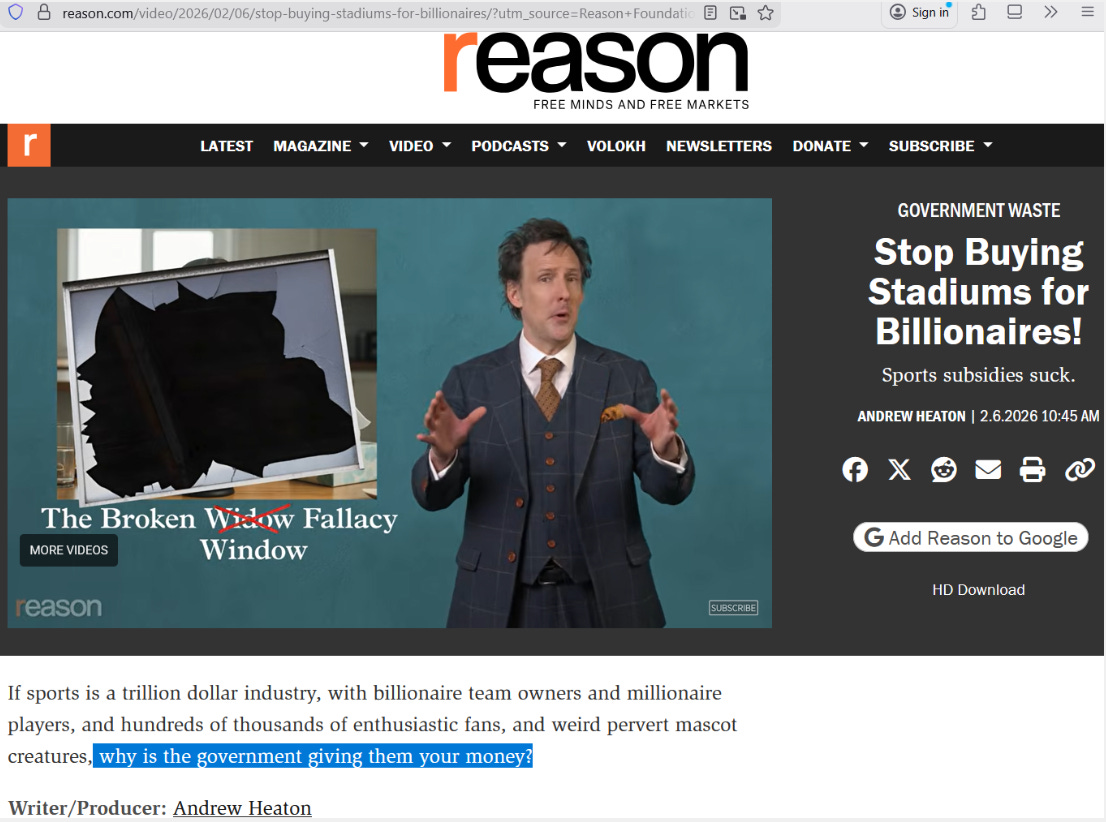
75% of the funds to build stadiums comes from the taxpayers
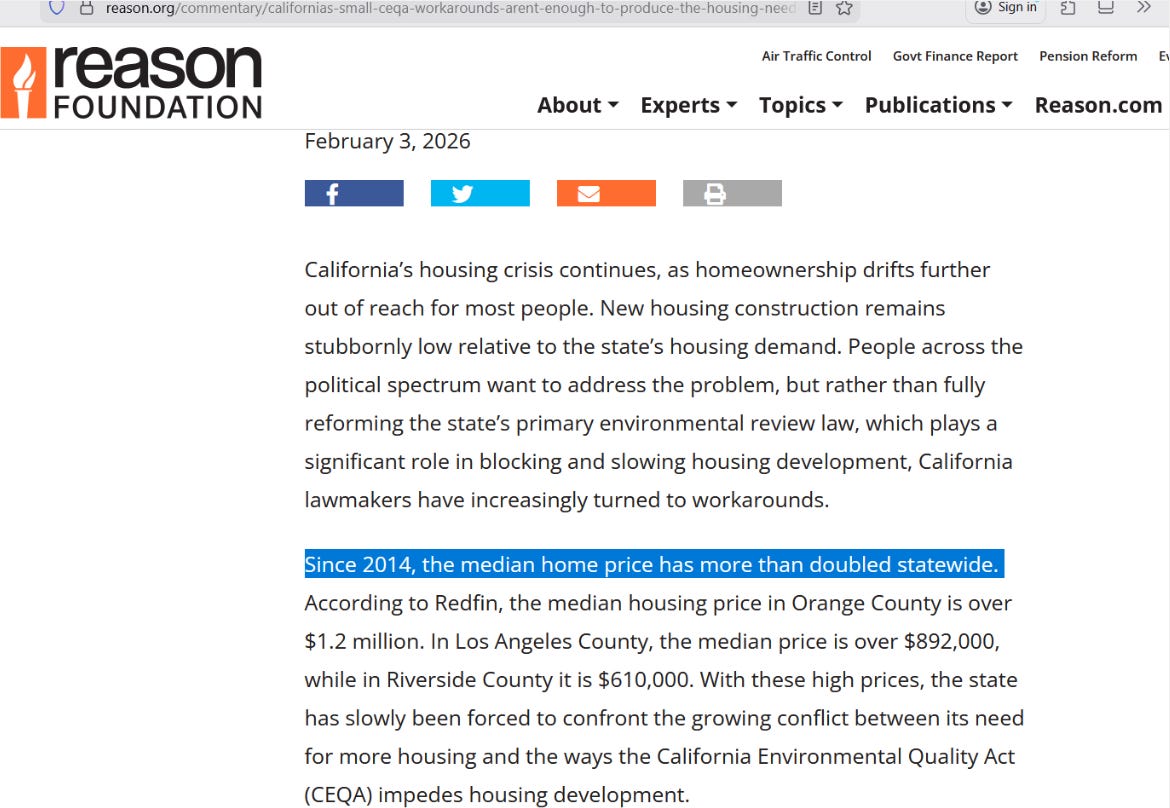
Government regulations caused home prices to double in California
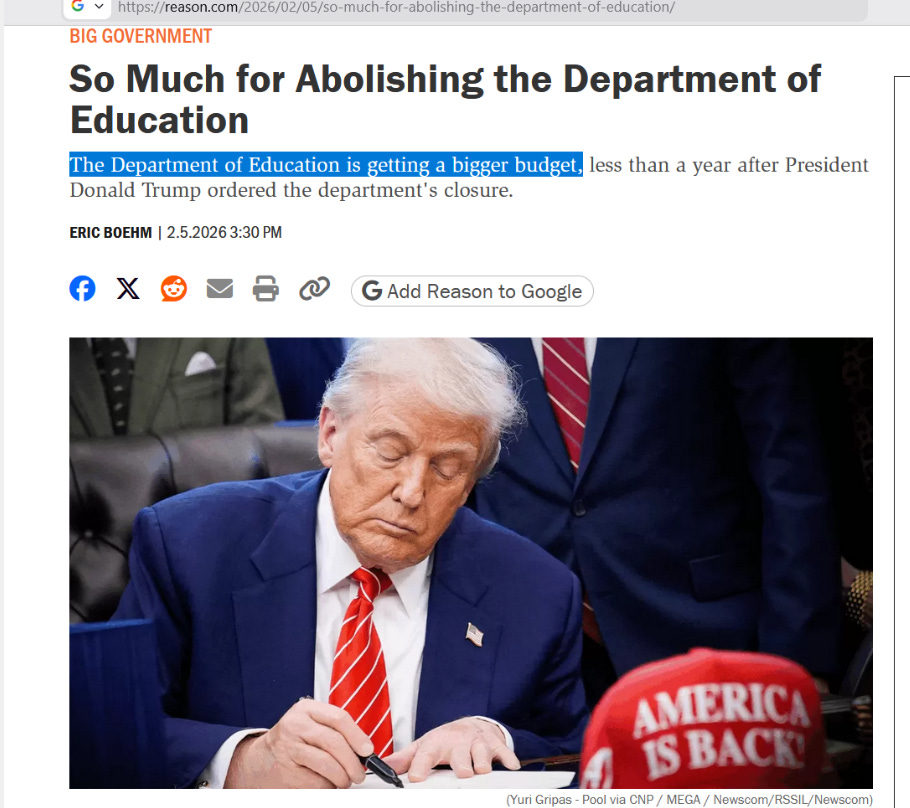
Entrenched bureaucrats are undercutting federal down-sizing
An outfit called Represent Us goes even deeper into the mechanics of corruption which are an emergent property that goes along with any concentration of government power and control:
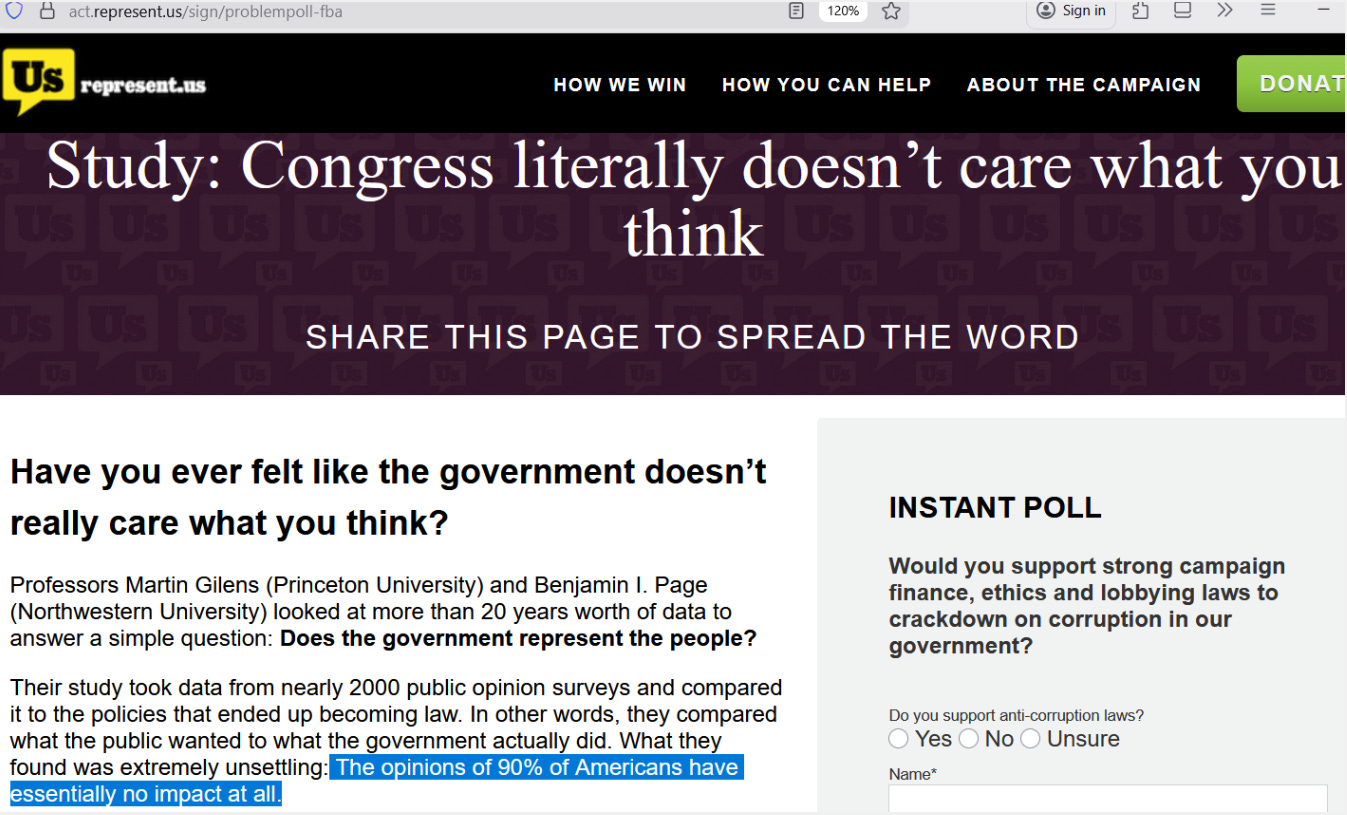
Being insulated from public disapproval, Congress keeps passing policies we do not want and getting re-elected to do it to us again — because of Deep State Establishment schemes of dark money and elusive censorship campaigns. After allowing for concentration of power, being a Washington-insider pays off well:
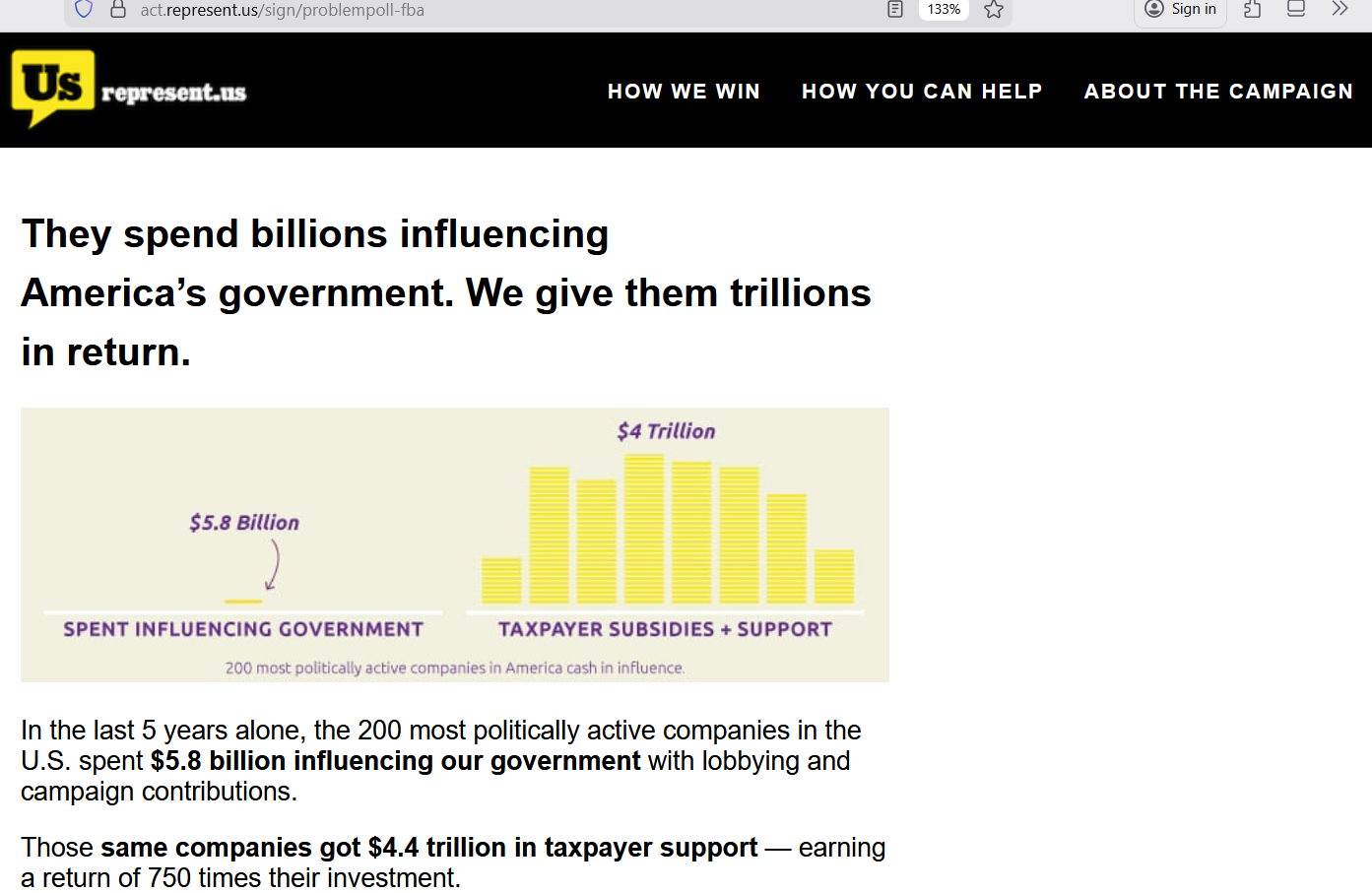
When competing with other firms in markets, they could not expect a return-on-investment that is anywhere close to 750x — like they get when they agree to get in bed with the government and, if called upon, to work against the interests of the American public. A vote of a rich government crony is worth 2 votes from the Middle Class:
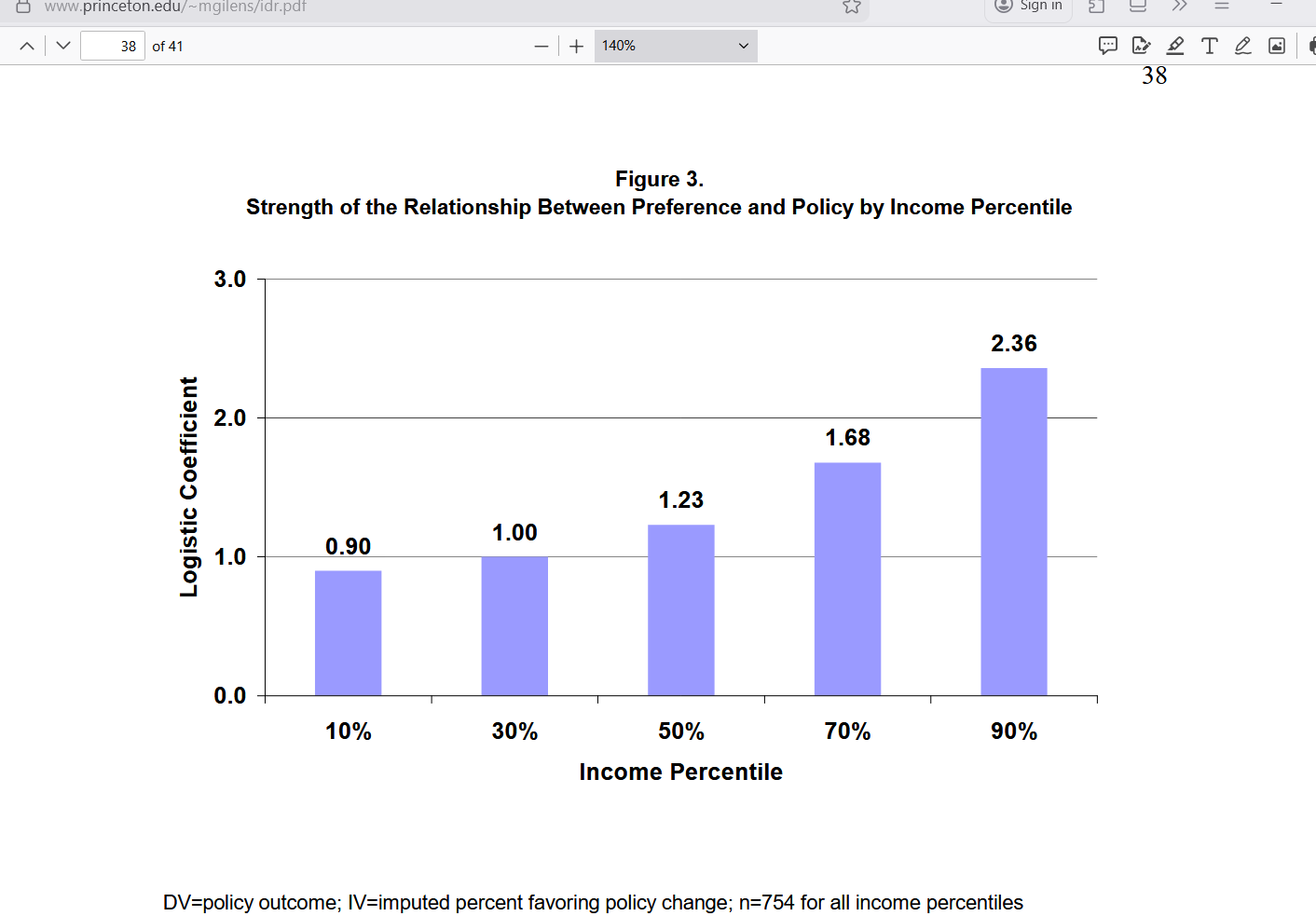
Here is how it shows up in getting public policy passed into law:
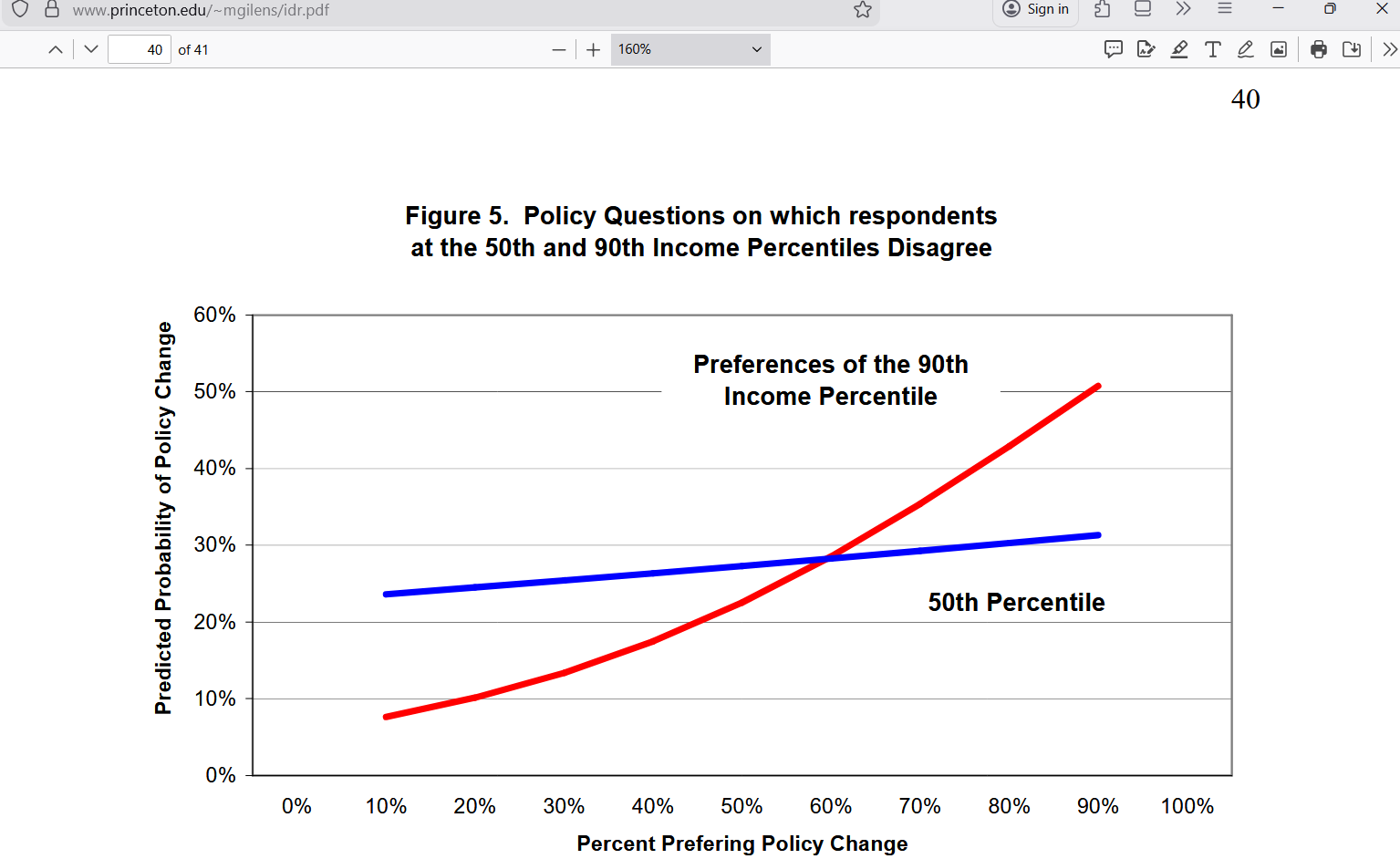
If 90% of “Median Voters” want a public policy, then it only has a ~30% chance to pass (it is more likely to fail than to pass), but if 90% of the top ten percent by income want a policy, then it is more likely to pass than to fail. This is how the concentration of power works out in the real world, and the solution is to un-concentrate the power.
Restoring the original intent of the U.S. Constitution — where state governments are expected to be spending and regulating more than any federal government — would help out a lot, taking us back to a time of federalism crudely referred to as “laboratories of democracy.” With power concentration, you create a single point of failure.
With power concentration, the stakes rise by so much that it invites corruption. Practical reform takes account of this aspect of reality, and then uses hard limits which preclude the over-concentration of power. Our founders created an imperfect system, but it was more perfect than any social system ever created.
It was an imperfect union, but more perfect than any union in history. After restoring that original system of governance, we can tweak it to make it even less imperfect than the founders originally did.** We would be discharging our moral obligation as Americans to strive for a more perfect union.
It’s either that, or we get eaten by the wolves.
**One imperfection of the U.S. Constitution is that the founders did not lay out clearly that “regulation of interstate commerce” means the regular (unhampered) flow of physical goods across borders. Because it was kept vague, activist judges decided that regulation of interstate commerce lets the federal government interfere with business.