
Peak Affordability
Post #1667

NOTE: A prior post related to this topic is here.
Pundits like to use the height of the stock market as a metric for determining whether the U.S. economy is healthy, but stock market valuation in today’s economy is no longer only driven up by investor confidence, but also by easy money policies. When investor confidence is the only thing that drives up stock prices, you get ~50% of GDP:
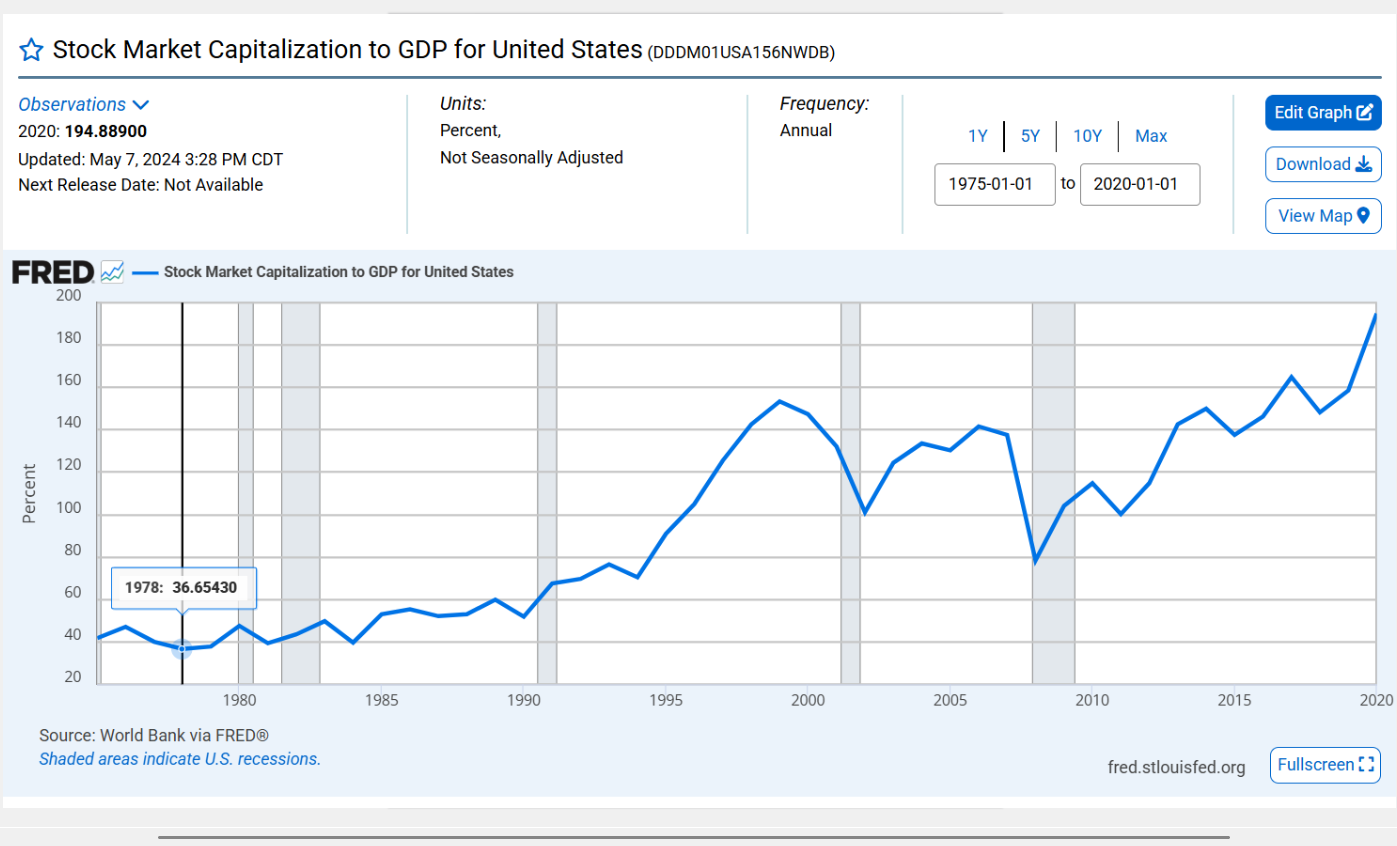
But if “unchecked government spending and credit expansion” take hold in an economy, stock market prices diverge from real fundamentals, because stock markets are natural places for money bubbles to go. If an excess of cash is printed, then you can bet your bottom dollar that some of it will go into stock market price inflation.
This is not “good” though, and it even indicates that we are past our peak affordability:
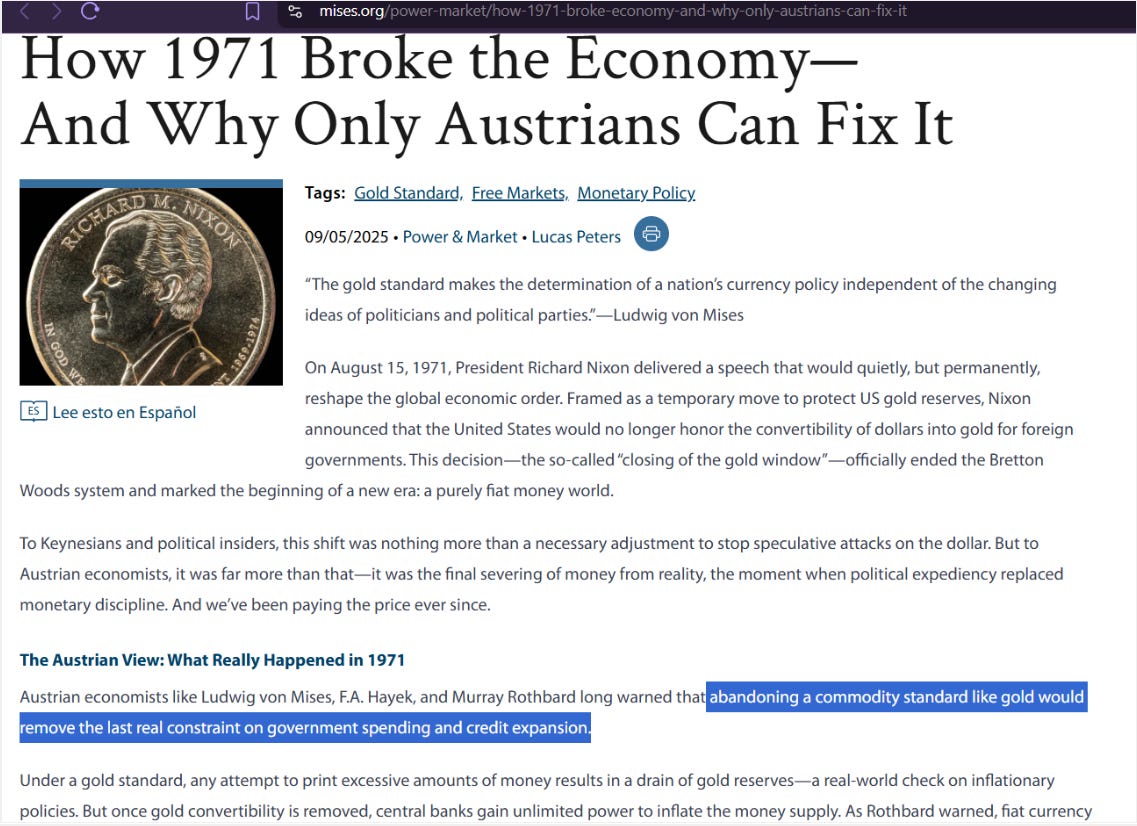
In 1971, Nixon removed the last vestige of the Gold Standard, allowing for unchecked government spending and unchecked credit expansion. Elite globalist technocrats love those two things, because they always have big plans for spending money, even if their “central planning” ends up harming most of the people of planet Earth.
Because these elite globalist technocrats have had too much power for too long, and have driven economic investment away from real measures of value, living standards are becoming less affordable over time. Let’s compare eras:
Market Cap to GDP (Buffet Index)
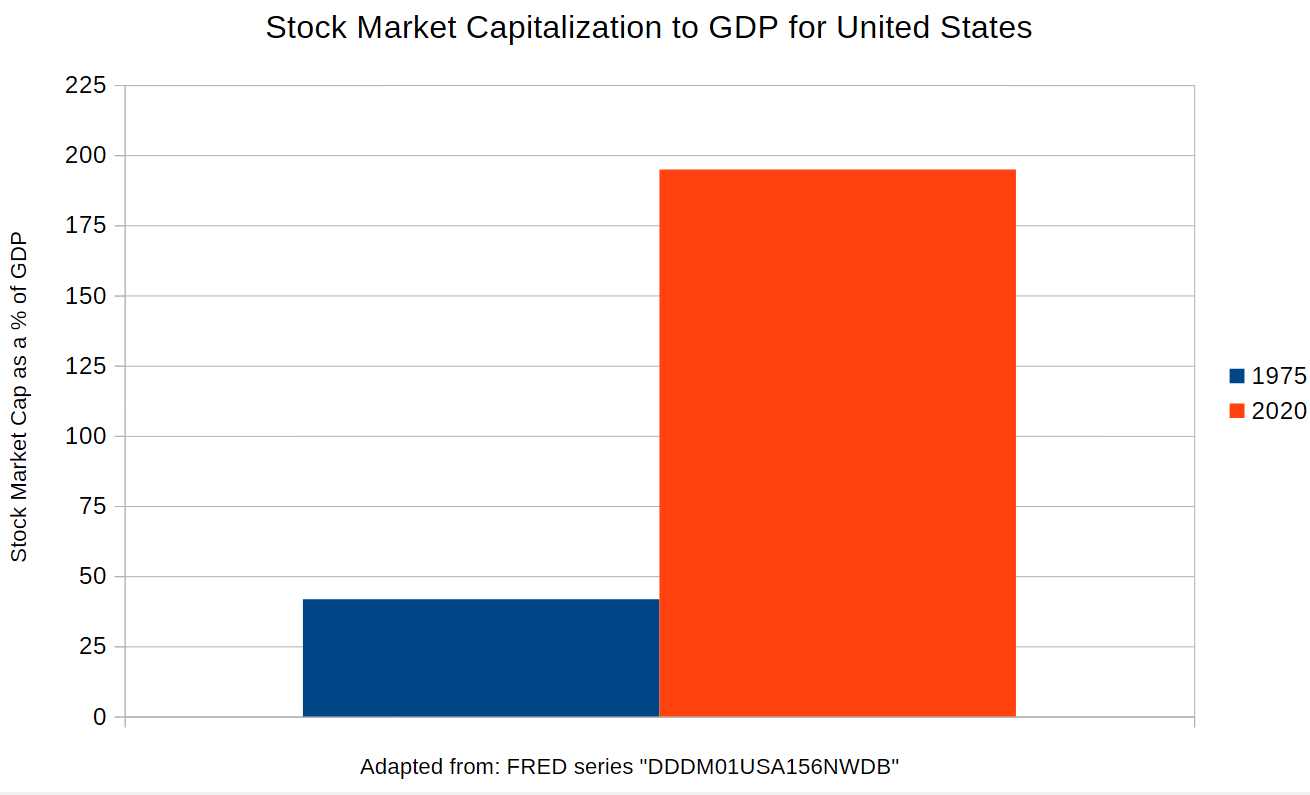
Warren Buffet was asked about what number to watch out for, in order to predict when bad times lie ahead. His answer became what is known as the “Buffet Indicator” and it is the total valuation of the stock market in relation to GDP. High numbers are dangerous, suggesting “over-valuation” of the stock market.
Without easy money policies, the only thing that can raise stock prices in a general way is business performance.
When that is the case, the entire stock market is valued at just below 50% of GDP. The latest year showing above is not the highest year (it is higher now), indicating that our stock market is so overvalued that it could undergo a “market correction” with stock prices falling by over 50% in a single month.
Yearly Vehicle Sales per 100 Adults
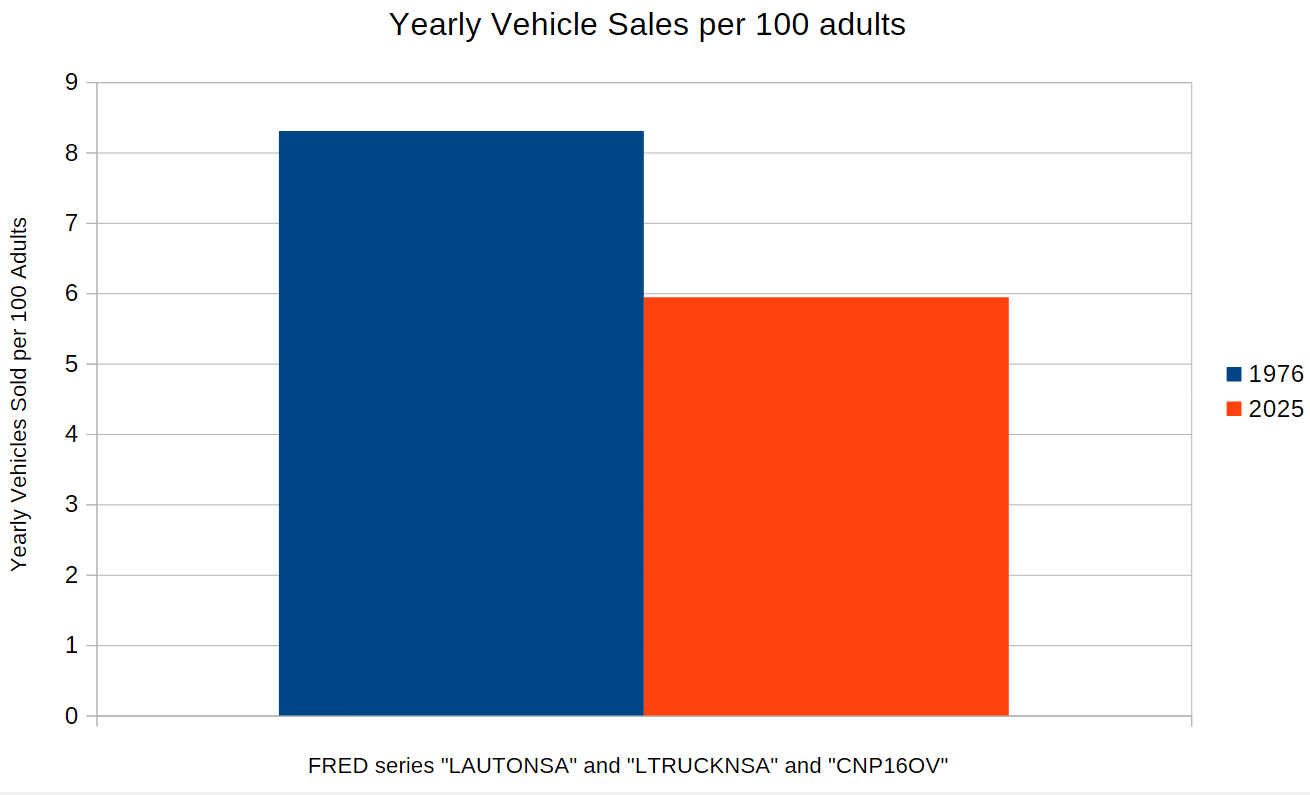
While some of the drop in the vehicle sales is due to cars lasting longer, some of it is definitely due to lower affordability. While easy money policies help to explain why Americans can no longer afford to live as well off as they used to, other government interventions, such as regulations, are also to blame.
Again, it’s the technocrats at fault.
Housing Starts per 100 Adults
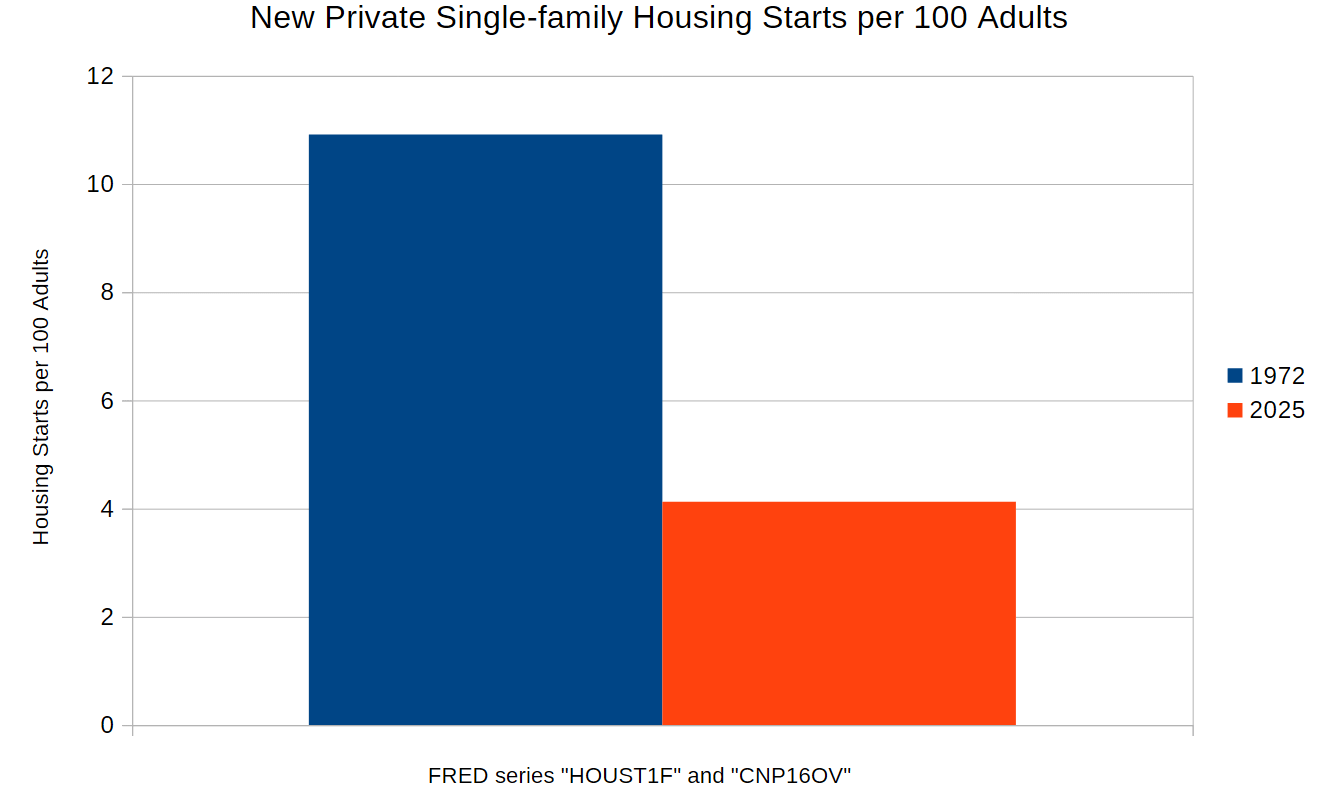
Not as many new homes are built per year, for each 100 adults in the USA. Easy money and regulation really did a number on the affordability of home buying. If you take the blue collar (non-supervisory) weekly earnings of those employed, and you correct it to account for people not employed, then it takes over 12 years of wages to buy a home:
Homes Afforded by 15 years of Pay**
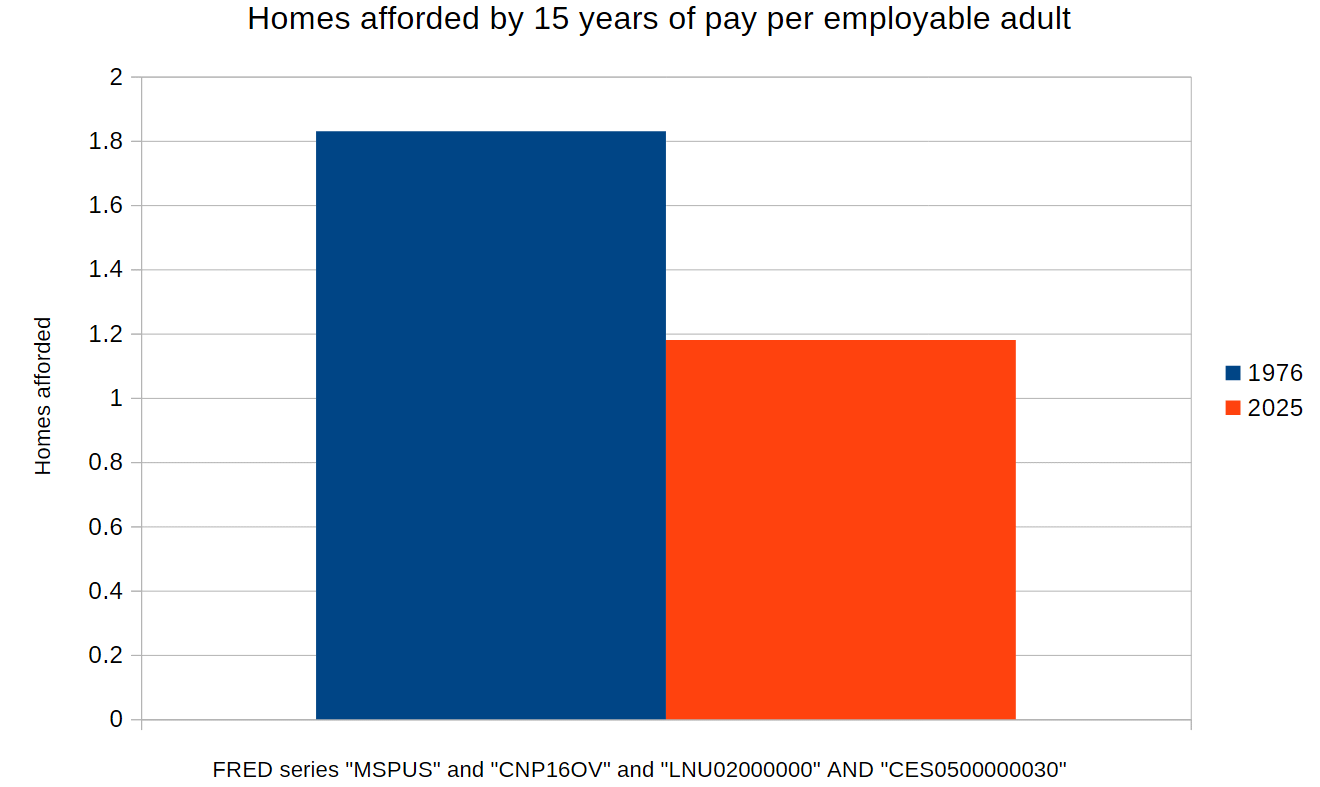
**NOTE: If you take the weekly pay of blue collar workers, and then adjust it down so that it also covers all adults not working, you obtain the overall average pay for all U.S. adults (those working, and those not working). If you then put that overall average toward a home purchase, you need over 12 years of wages to buy a home.
Back in 1976, with 15 years of pay which has been corrected down so that it can be averaged over the entire U.S. adult population, you could purchase just over 1.8 homes. But in 2025, you could only buy almost 1.2 homes with that same pay. That is one-third less in the “home-buying power” of wages.
Again, thank the technocrats for that.
Crude Oil afforded by 1 Week of Pay**
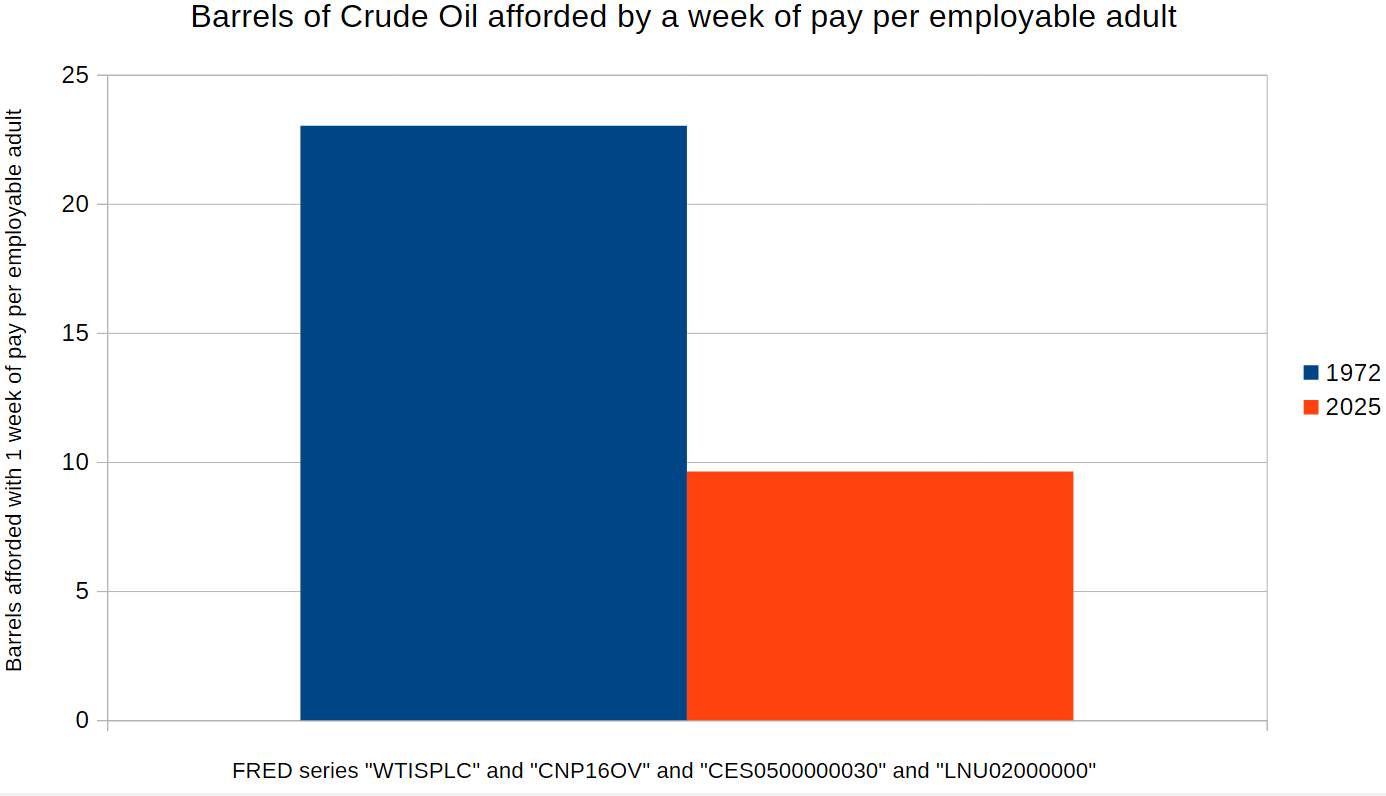
**NOTE: While nobody buys crude oil with the wages that they earn, this measure was computed the same way as above: “weekly pay averaged over all employable adults.”
Part of the reason that wages no longer could purchase as many barrels of oil as they could have back in 1972 is due to international policies that go beyond the effect of domestic money printing, and domestic regulations. The oil cartel known as OPEC had profiteers that extended beyond the Middle East, like British Petroleum (BP).
Such profiteers cheer when the oil prices spike, and they obtain special benefits when the world adopts Green Energy standards — driving oil prices even higher. Also driving real wages down is unchecked immigration. And even there, we can thank the anti-capitalist technocrats for having this reduced buying power of our wages.
The way out of the mess we are in
The evidence suggests that we need to return to the public policies of the past, before the elite globalist technocrats had gotten so much profiteering control over the U.S. economy. One way to restore sound policy is to return to sound money, using an Article V amendments convention which forces the federal government onto gold.
Another way is to hold a second Article V amendments convention to impose term limits.
Another way is to hold a third Article V amendments convention to impose a spending cap set by the prior 2-year average of private sector wages (governments should never spend as much as the sum of all private wages earned in a previous year). In 1929, private wages were 5x what the government spent, and the people drove the economy.
Another way is to hold a fourth Article V amendments convention to impose a regulation cap set to 20,000 total pages of federal law — as was true in the early 1950’s. It will abolish the IRS and set up a Fair Tax (single national sales tax), so that all Americans only pay one single federal tax (ever): one rate for everyone, everywhere.
These 4 amendments conventions have the capability of “fixing” America. They involve a majority of states getting together to add amendments to the U.S. Constitution in a manner which bypasses federal oversight and control. According to Article V, a majority of states have a “unilateral right” to amend the U.S. Constitution.
A follow-up post putting some meat on the bone and showing what these 4 amendments would look like is here.
Reference
[“Buffet Indicator”] — World Bank, Stock Market Capitalization to GDP for United States [DDDM01USA156NWDB], retrieved from FRED, Federal Reserve Bank of St. Louis; https://fred.stlouisfed.org/series/DDDM01USA156NWDB
[unsound (fiat) money is a really, really bad idea] — https://mises.org/power-market/how-1971-broke-economy-and-why-only-austrians-can-fix-it
[cars] — U.S. Bureau of Economic Analysis, Motor Vehicle Retail Sales: Domestic and Foreign Autos [LAUTONSA], retrieved from FRED, Federal Reserve Bank of St. Louis; https://fred.stlouisfed.org/series/LAUTONSA
[light-weight trucks] — U.S. Bureau of Economic Analysis, Motor Vehicle Retail Sales: Light Weight Trucks [LTRUCKNSA], retrieved from FRED, Federal Reserve Bank of St. Louis; https://fred.stlouisfed.org/series/LTRUCKNSA
[adults] — U.S. Bureau of Labor Statistics, Population Level [CNP16OV], retrieved from FRED, Federal Reserve Bank of St. Louis; https://fred.stlouisfed.org/series/CNP16OV
[new homes] — U.S. Census Bureau and U.S. Department of Housing and Urban Development, New Privately-Owned Housing Units Started: Single-Family Units [HOUST1F], retrieved from FRED, Federal Reserve Bank of St. Louis; https://fred.stlouisfed.org/series/HOUST1F
[home prices] — U.S. Census Bureau and U.S. Department of Housing and Urban Development, Median Sales Price of Houses Sold for the United States [MSPUS], retrieved from FRED, Federal Reserve Bank of St. Louis; https://fred.stlouisfed.org/series/MSPUS
[weekly pay] — U.S. Bureau of Labor Statistics, Average Weekly Earnings of Production and Nonsupervisory Employees, Total Private [CES0500000030], retrieved from FRED, Federal Reserve Bank of St. Louis; https://fred.stlouisfed.org/series/CES0500000030
[employment level] — U.S. Bureau of Labor Statistics, Employment Level [LNU02000000], retrieved from FRED, Federal Reserve Bank of St. Louis; https://fred.stlouisfed.org/series/LNU02000000
[domestic oil price] — Federal Reserve Bank of St. Louis, Spot Crude Oil Price: West Texas Intermediate (WTI) [WTISPLC], retrieved from FRED, Federal Reserve Bank of St. Louis; https://fred.stlouisfed.org/series/WTISPLC